Motorcycle winter storage in Omaha takes more planning than simply parking the bike in the garage and throwing a cover over it. Nebraska’s long cold-weather season can leave a motorcycle sitting for months, which gives batteries time to discharge, fuel to age, tires to lose pressure, and moisture to reach exposed metal.
A bike that ran perfectly in October can therefore be difficult to start in March or April if it was stored without preparation.
Good winter storage protects more than the battery. It also helps reduce fuel-system deposits, corrosion, tire problems, chain rust, fluid issues, and the frustrating spring ritual of replacing parts before the first ride.
For Omaha street riders, cruisers, sportbike owners, track-day riders, and performance enthusiasts, the goal is simple: put the motorcycle away correctly so it comes back out of storage in reliable condition.
How to Prepare a Motorcycle for Winter Storage
The best storage routine starts before the final ride of the season. A few maintenance tasks now can prevent several months of slow deterioration.
Begin by inspecting the motorcycle as you normally would before a longer trip. Look at tires, brakes, fluids, chain or belt condition, leaks, electrical warnings, and anything that has recently felt unusual.
Winter should not become a place to hide an existing problem. If the bike already hesitates, leaks, struggles to start, or shows warning lights, diagnosing the issue before storage can make spring much easier.
Protect the Battery Before Cold Weather Arrives
The battery is one of the most common reasons a stored motorcycle refuses to start when riding season returns.
Motorcycle batteries naturally self-discharge. Modern bikes can also continue using a small amount of electricity while parked because clocks, alarms, immobilizers, trackers, and ECU memory may remain active.
A partially discharged battery can also suffer long-term damage if it sits too low for too long.
For riders using conventional or AGM batteries, winter maintenance should include checking battery condition and keeping the battery properly charged.
Use the Correct Battery Maintainer for Your Battery Type
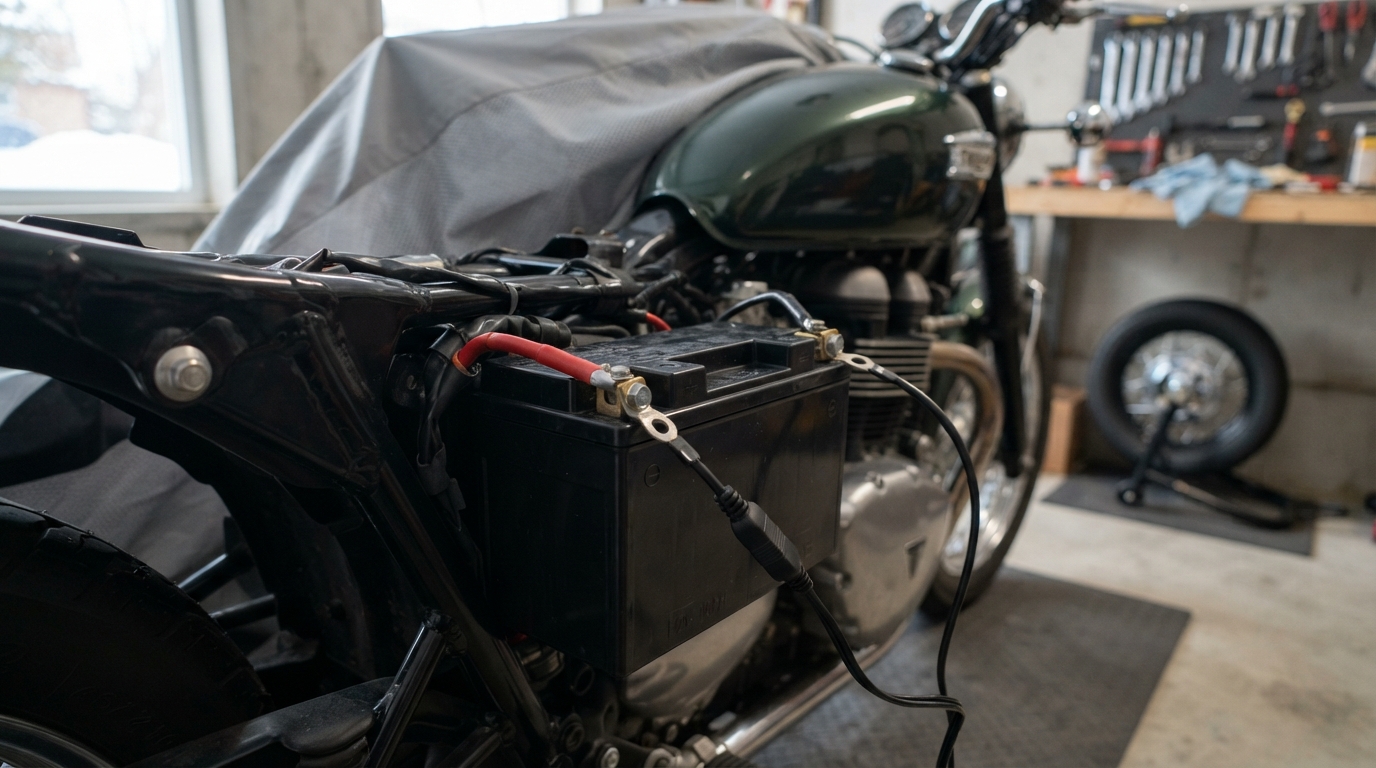
A smart battery maintainer can monitor voltage and apply charge only when needed. That is different from leaving an old-style charger connected continuously without regulation.
Check whether the charger is compatible with the battery technology in your motorcycle. AGM, conventional lead-acid, and lithium batteries may require different charging profiles.
If the motorcycle will remain connected to a maintainer, inspect the leads and terminals first. Loose, dirty, or corroded connections can create starting and charging problems later.
Yuasa recommends maintaining motorcycle batteries during winter or other long periods of storage. The company also notes that electrical systems can continue to draw power while the bike is parked.
Riders can review the manufacturer’s current motorcycle battery care and storage guidance for additional battery-maintenance information.
Do Not Assume Starting the Bike for Five Minutes Solves Battery Storage
Some riders periodically start a stored motorcycle and let it idle briefly. That may feel useful, but it is not a substitute for proper battery maintenance.
A short idle session may not restore the energy used to start the engine. It can also introduce moisture into the exhaust and engine if the motorcycle never reaches full operating temperature.
If the motorcycle is staying parked, use the storage process recommended for that bike rather than repeatedly starting it without riding.
A weak battery can also create confusing symptoms on modern motorcycles. Low voltage may contribute to difficult starting, warning lights, sensor faults, or inconsistent electronic behavior.
Clifford Cycles’ guide to motorcycle ABS and traction control in 2026 explains why battery and electrical health matter even on systems that seem unrelated to starting.
Prepare the Fuel System Before the Motorcycle Sits
Fuel is another major winter-storage concern.
Gasoline can deteriorate during extended storage. Modern fuel systems have small passages, injectors, pumps, filters, seals, and other components that work best with clean fuel.
Follow the motorcycle manufacturer’s storage recommendation for the tank and fuel system. Many manufacturers recommend filling the tank and adding an appropriate fuel stabilizer before extended storage.
If using stabilizer, add the correct amount and allow treated fuel to circulate through the system according to the product and motorcycle instructions.
Do not assume that more stabilizer is better. Follow the specified concentration.
Storage Fuel Problems Can Look Like Tuning Problems in Spring
A motorcycle that starts poorly after winter may have more than one possible cause.
Old fuel, dirty injectors, a weak battery, contaminated plugs, clogged filters, low fuel pressure, or an electrical problem can all create hesitation or rough running.
That is why replacing performance parts immediately is usually a poor diagnostic strategy.
If the bike ran properly before storage but develops rough idle, difficult starting, weak throttle response, or hesitation afterward, begin with basic mechanical and fuel checks.
Clifford Cycles’ article on fuel injection cleaning and dyno tuning explains how old fuel, dirty injectors, sensors, battery condition, and tuning can produce similar symptoms.
How to Prevent Tire, Chain, and Corrosion Problems During Storage
Battery and fuel care get most of the attention, but several mechanical areas can deteriorate while a motorcycle simply sits.
Tires slowly lose air. Chains can develop surface rust. Moisture can attack unfinished metal. Dust and contaminants can remain on painted surfaces for months.
A complete motorcycle winter storage routine should therefore include the chassis as well as the engine.
Inspect Tires, Drive Components, and Fluids Before Parking
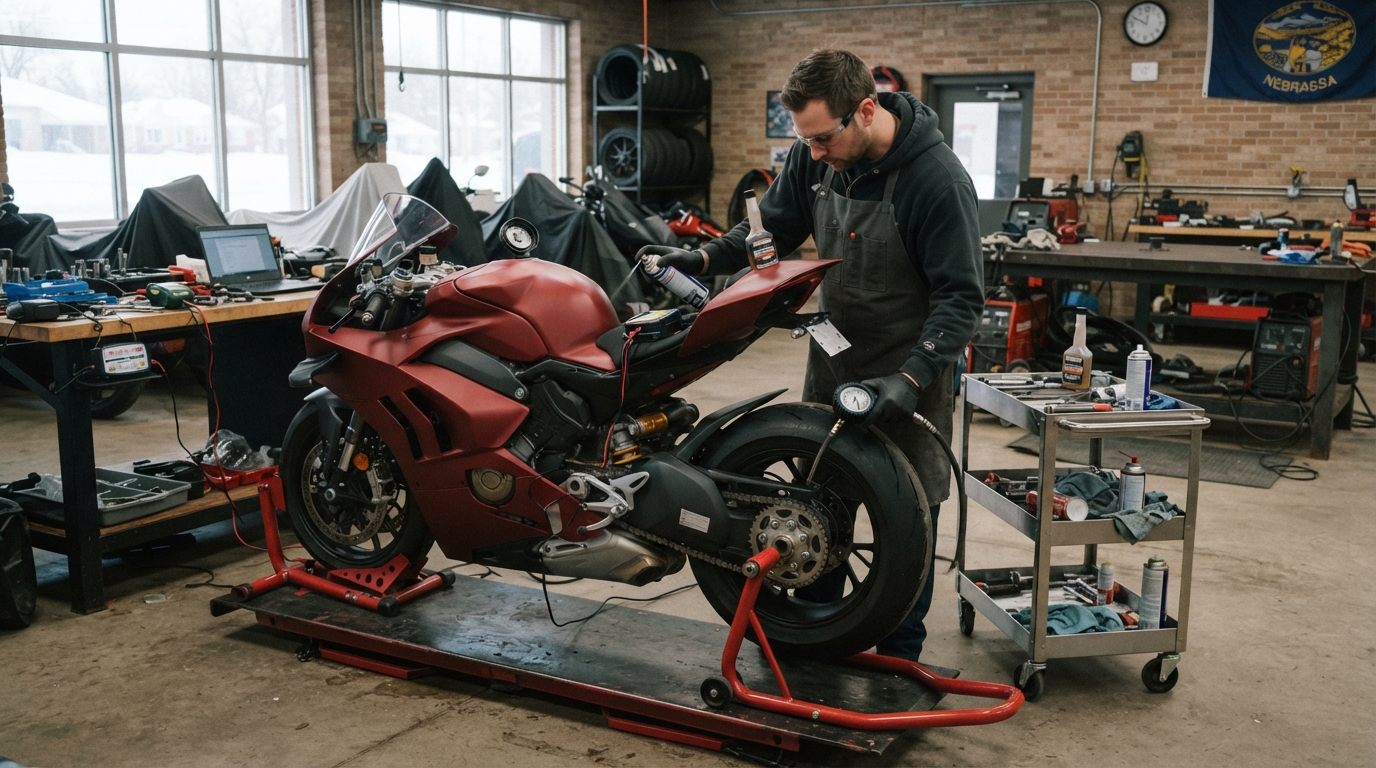
Check tire pressure before storage and use the motorcycle manufacturer’s recommended pressure rather than guessing.
Inspect tread condition, cracking, punctures, unusual wear, and tire age. Winter storage will not improve a tire that is already approaching replacement.
If the motorcycle uses a chain, clean and lubricate it before the bike sits for months. Check chain tension and inspect the sprockets for wear.
Belt-drive motorcycles should also be inspected for damage, contamination, or improper adjustment according to the manufacturer.
Fluid leaks deserve attention before storage. Look around the engine, cooling system, brake components, forks, and final-drive areas.
Clean the Motorcycle Before Covering It
Storing a dirty motorcycle can trap road grime, insects, moisture, brake dust, and contaminants against surfaces for months.
Wash the motorcycle before storage, then allow it to dry completely.
Pay attention to areas where moisture collects. Clean wheels, suspension components, the underside of the bike, and exposed metal.
Lubricate appropriate moving parts according to the owner’s manual. Painted and metal surfaces can also receive suitable protection where recommended.
Use a breathable motorcycle cover rather than wrapping the bike tightly in material that can trap condensation.
If the motorcycle will be stored somewhere with rodents, check the storage area and consider appropriate measures to keep animals away from wiring, filters, and openings.
Do not block intake or exhaust openings in a way that could be forgotten in spring. If you use temporary protection, attach a clear reminder to the motorcycle.
Before parking the bike for months, it is also a good time to check service intervals. Oil, coolant, brake fluid, spark plugs, filters, and other maintenance items should follow the motorcycle manufacturer’s schedule.
Some manufacturers recommend changing engine oil before extended storage so contaminants are not left inside the engine for months.
Keep a written storage checklist. Record what you changed, what you disconnected, and anything that needs attention when the motorcycle returns to service.
That note can prevent simple mistakes on the first warm day of spring.
When riding season returns, do not immediately start the motorcycle and head onto the highway.
Check tire pressure again. Inspect the battery, brakes, fluids, lights, controls, chain or belt, and any components you disconnected or covered.
Modern motorcycles should also be checked for warning lights and charging-system problems before a longer ride.
If the motorcycle needs more than basic owner maintenance, Clifford Cycles offers motorcycle service, maintenance, tuning, and performance support for street and performance motorcycles.
Good motorcycle winter storage is really about protecting the next riding season.
A charged battery, treated fuel system, clean chain, properly inflated tires, protected surfaces, and a documented maintenance plan can prevent many common spring problems.
For Omaha riders, October is a smart time to start that process rather than waiting until freezing weather arrives.
The motorcycle may spend several months sitting still, but the battery, fuel, tires, and exposed materials continue to change during that time.
Prepare them correctly now, and the first good riding day of 2027 is far more likely to begin with a clean start instead of a dead battery, rough idle, or unexpected repair bill.