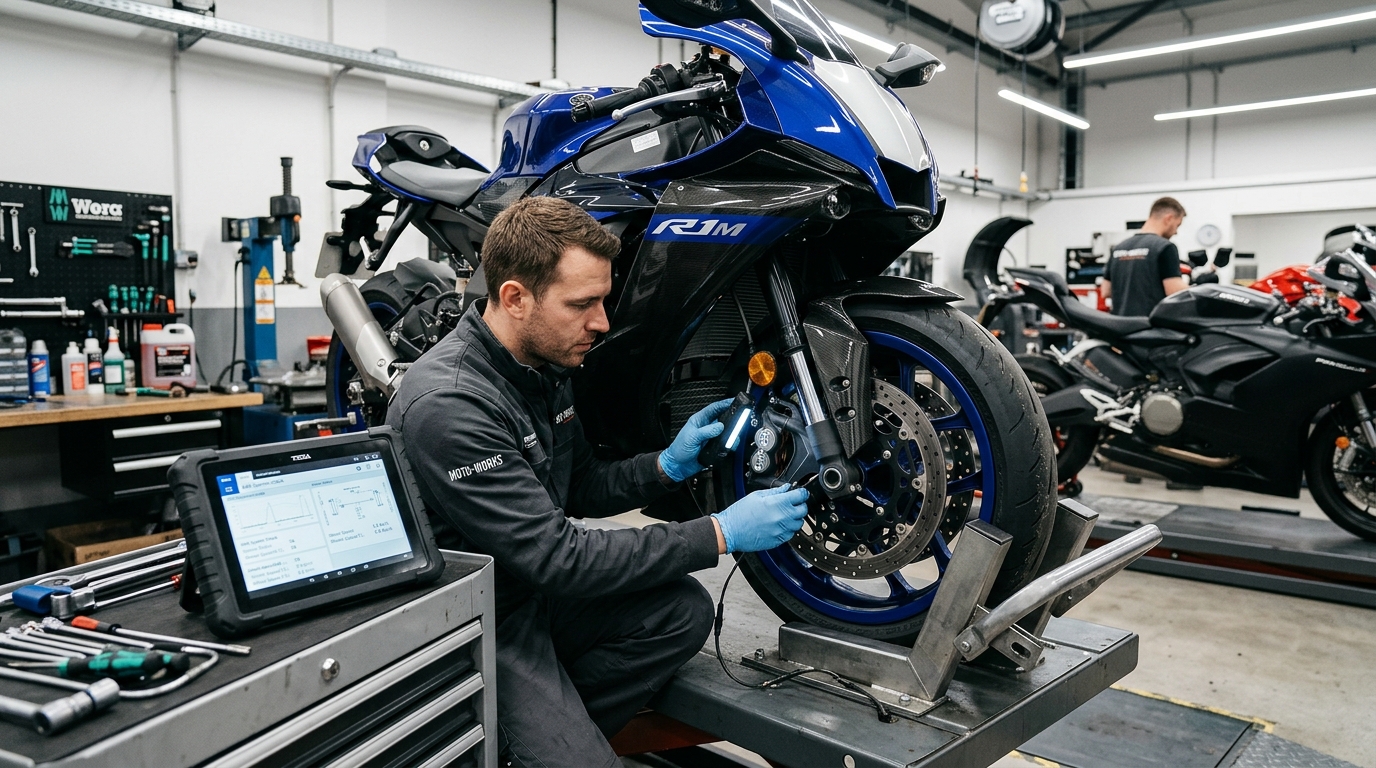
Motorcycle ABS is no longer a luxury feature reserved only for premium touring bikes or high-end sport motorcycles. In 2026, more riders are paying attention to anti-lock braking systems, traction control, rider modes, cornering ABS, and electronic safety aids because modern motorcycles are becoming faster, smarter, and more technology-driven. For daily riders, weekend riders, and performance-focused owners, this shift changes how a bike should be inspected, maintained, and upgraded.
ABS helps prevent wheel lock during hard braking. Traction control helps reduce wheel spin during acceleration. Both systems support rider control, especially when roads are wet, dirty, uneven, or unpredictable. These features cannot replace skill, judgment, quality tires, or proper maintenance, but they can give riders an important safety advantage when conditions change quickly.
The important thing is understanding how motorcycle ABS and traction control fit into the whole bike. A safety system works best when the brakes, tires, suspension, sensors, wiring, battery, fuel system, and drivetrain are also in good condition. A poorly maintained motorcycle with advanced electronics can still feel unstable, stop poorly, or deliver power in a way that makes the bike harder to manage.
Clifford Cycles already covers performance basics like choosing the right motorcycle chain and sprockets and ceramic bearings vs. steel bearings. This guide focuses on modern safety tech and why riders should think about braking, traction, tuning, and maintenance as one complete system.
Why Motorcycle ABS Matters More In 2026
Motorcycles expose riders more than cars do. A small traction loss, locked front wheel, poor tire choice, or panic brake can lead to a serious crash. That is why braking technology matters. ABS does not make a rider invincible, but it can help the rider maintain control during emergency braking instead of sliding from a locked wheel.
The Insurance Institute for Highway Safety has reported that ABS-equipped motorcycles have lower fatal crash involvement rates than comparable motorcycles without ABS. For riders shopping for a used bike, that makes ABS worth considering alongside mileage, service history, tire condition, engine health, and overall fit.
Motorcycle ABS helps during hard braking
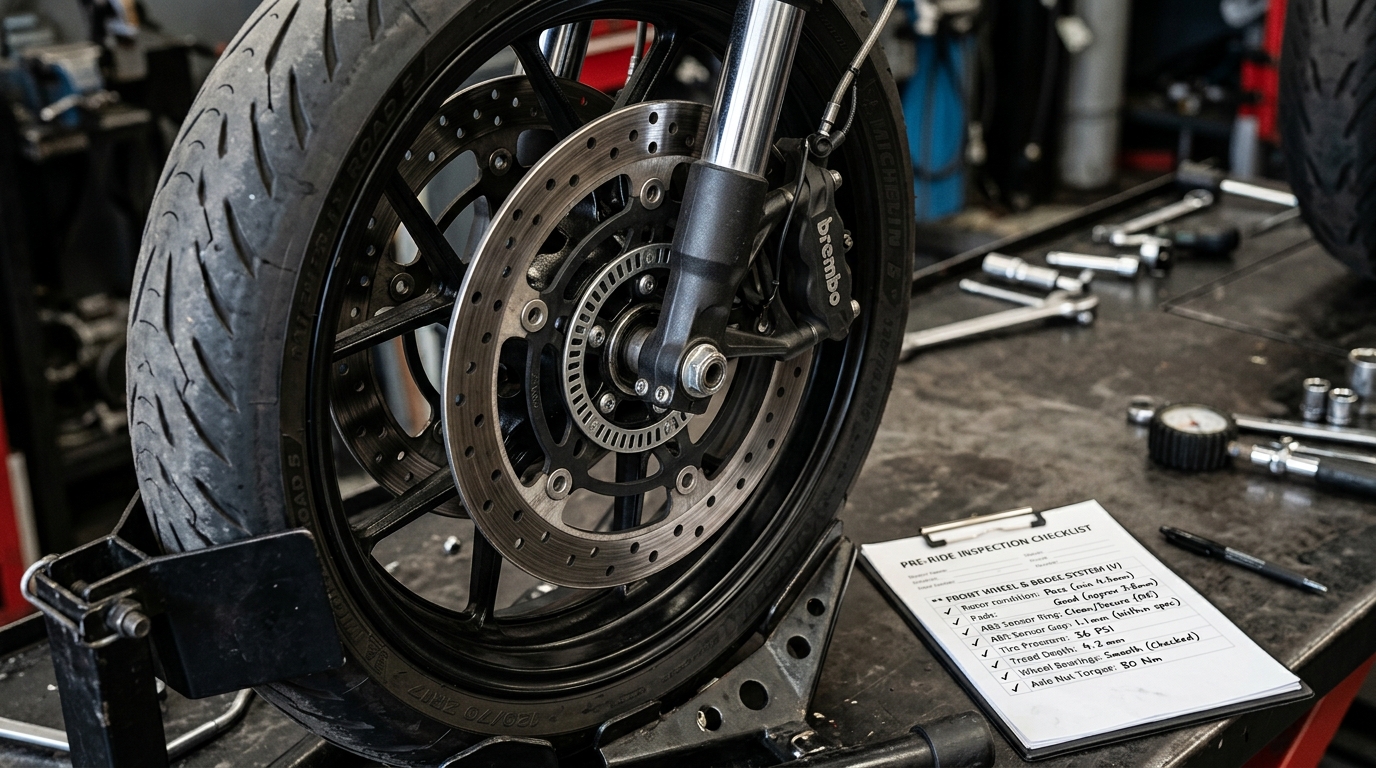
When a rider brakes hard, the wheels can lock if the tires lose grip. A locked front wheel can cause a quick fall. A locked rear wheel can cause a slide, especially if the rider panics or releases the brake suddenly. ABS monitors wheel speed and modulates brake pressure to help prevent lockup.
This can be especially useful on wet pavement, gravel patches, painted road markings, leaves, oil spots, or rough surfaces. Even experienced riders can face surprise hazards. Good technique still matters, but ABS adds a safety layer when reaction time is short.
ABS does not fix bad tires or neglected brakes
ABS needs grip to work well. If the tires are old, flat-spotted, underinflated, hardened, or worn unevenly, braking performance will suffer. The same applies to weak brake pads, dirty fluid, warped rotors, sticky calipers, or damaged brake lines.
Before trusting any safety system, inspect the basics. Check tire date codes, tread depth, tire pressure, rotor condition, pad life, brake fluid, and lever feel. If the bike feels vague, unstable, or slow to stop, service should come before spirited riding.
Traction control helps manage power delivery
Traction control works on the acceleration side of the safety equation. It helps reduce wheel spin when the rear tire loses grip. This can happen during aggressive throttle input, wet roads, cold tires, sandy corners, painted lines, or uneven pavement.
Modern traction control systems vary by motorcycle. Some are basic. Others use more advanced sensors, lean-angle data, rider modes, and adjustable intervention levels. Riders should read the owner’s manual and understand what their system can and cannot do. A track setting, rain setting, and street setting may behave very differently.
Performance tuning should respect electronic safety systems
Fuel maps, exhaust changes, gearing changes, tire size changes, and engine upgrades can affect how a motorcycle behaves. More power is not automatically better if the bike becomes harder to control. A smooth throttle response often matters more than chasing peak horsepower.
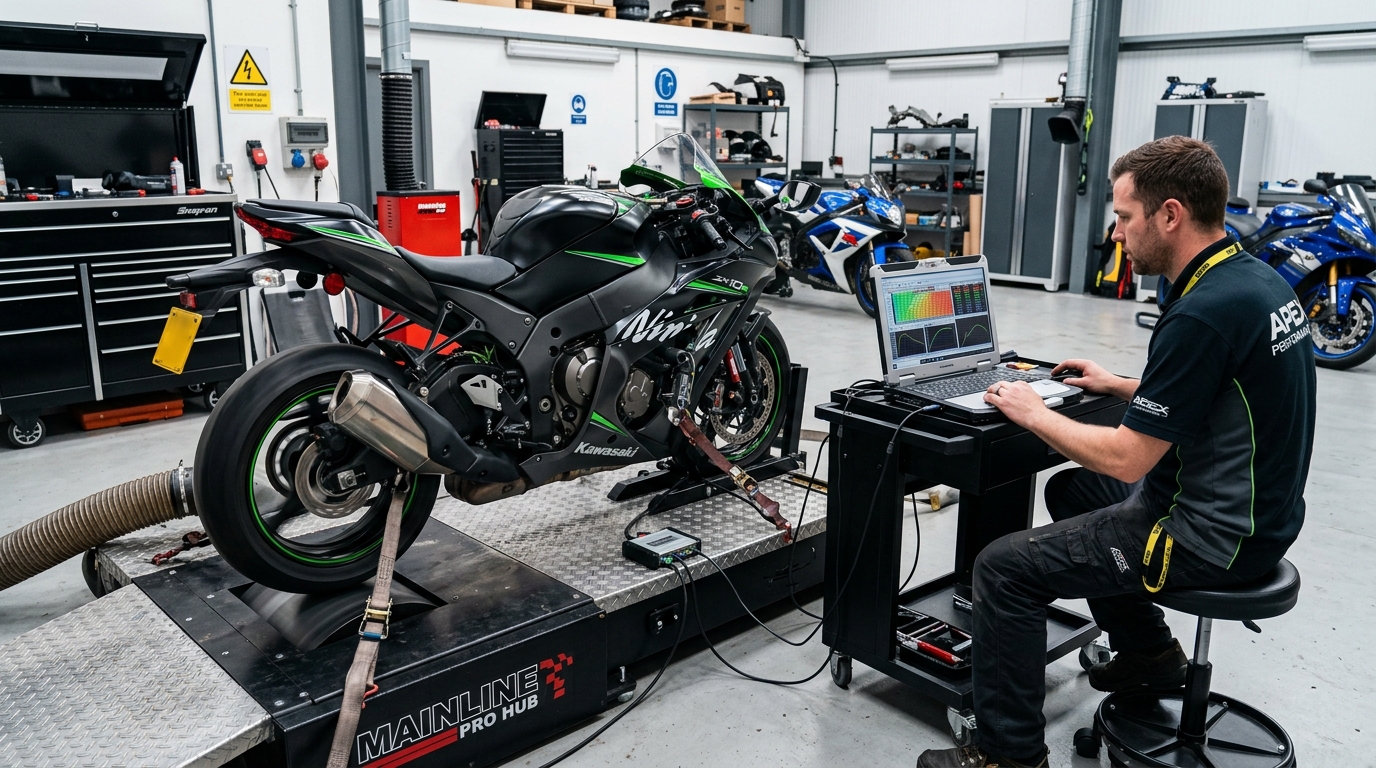
If you tune the bike, make sure the setup matches your riding style. Clifford Cycles offers motorcycle services such as dyno tuning, fuel injection tuning, fuel injector cleaning, and Power Commander custom fuel maps. A proper tune can help the bike deliver power more predictably, which supports both performance and control.
How Riders Should Maintain Modern Safety Tech
A motorcycle with ABS, traction control, and rider modes needs more than regular oil changes. These systems depend on sensors, wiring, clean signals, correct wheel speed readings, good tires, and healthy electrical components. If one part of the system fails, warning lights may appear or the feature may stop working.
For general safety background, riders can review the National Highway Traffic Safety Administration’s motorcycle safety page here: NHTSA motorcycle safety resources. NHTSA reminds riders that safe motorcycling takes balance, coordination, and good judgment, even when the bike has modern features.
Check sensors, wiring, tires, and battery health
ABS and traction control rely on accurate wheel-speed information. Dirt, damaged sensor rings, loose wiring, wrong tire sizes, weak batteries, or poor electrical connections can cause problems. If an ABS light stays on, do not ignore it. The brakes may still function, but the anti-lock feature may not work properly.
Electrical issues can also affect modern bikes in frustrating ways. A weak battery may cause random warnings, rough starts, or inconsistent system behavior. If you see warning lights after maintenance, tire changes, or wheel removal, have the system checked before assuming it is harmless.
Tire changes should protect ABS sensor components
Tire installation on an ABS-equipped motorcycle needs care. The sensor ring, wheel speed sensor, spacers, and wiring should stay clean and properly aligned. A careless wheel installation can damage parts or create incorrect readings.
This is one reason professional service matters. Clifford Cycles highlights same-day ride-in tire changes and all-makes motorcycle service, which is useful for riders who want fast turnaround without risking careless work. A tire change should leave the bike safer, not create a new warning light.
Used motorcycle buyers should inspect safety tech before purchase
If you are buying a used motorcycle in 2026, do not rely only on appearance. Confirm whether the bike has ABS, traction control, or rider modes. Check that warning lights turn on during startup and turn off correctly after the system check. Ask for service records, tire history, brake work, and any modifications.
Be careful with heavily modified bikes. Exhaust changes, gearing changes, deleted sensors, poor wiring, or cheap tuning can create hidden problems. A pre-purchase inspection can reveal issues before you spend money on a bike that needs expensive correction.
Motorcycle ABS is a valuable safety feature, but it works best as part of a complete motorcycle setup. Tires, brakes, suspension, chain, sprockets, bearings, fuel mapping, and rider habits all affect how the bike responds. Modern electronics can help, but they cannot cover every maintenance shortcut.
For riders who want better safety and better performance, the smartest path is balanced. Keep the bike maintained, choose quality tires, service the brakes, tune power delivery correctly, and learn how your electronic systems behave. A motorcycle that stops well, grips well, and delivers power smoothly will always feel better than one built only for numbers on paper.
Whether you ride on the street, prepare for track days, or maintain a performance build, treat safety technology as part of the full riding package. In 2026, the best motorcycles are not only faster. They are better controlled, better maintained, and better matched to the rider.