Fuel injection cleaning and dyno tuning have become more important for riders in 2026 because modern motorcycles depend heavily on precise fuel delivery, clean sensors, stable electronics, and accurate fuel maps. A bike can have a strong engine, quality exhaust, and good parts, but it may still run poorly if the fuel system does not match the way the motorcycle is actually used.
Rough throttle, hesitation, popping on deceleration, poor idle, hard starting, weak midrange power, or strange fuel economy can all point to fuel delivery or tuning issues. Sometimes the problem starts after an exhaust change. Other times it appears after storage, old fuel, dirty injectors, wiring issues, or years of small maintenance gaps.
For riders who want smoother response, cleaner power, and better confidence, fuel injection cleaning and dyno tuning offer a practical path forward. The goal is not just chasing peak horsepower. The real value comes from making the motorcycle run cleanly, respond predictably, and match the rider’s setup.
Why Fuel Injection Cleaning and Dyno Tuning Matter in 2026
Modern motorcycles use electronic fuel injection to control how much fuel enters the engine. The system responds to throttle input, air temperature, engine speed, load, sensor readings, and factory programming. When everything works correctly, the bike feels smooth and predictable. When something falls out of balance, the rider feels it quickly.
A small fuel delivery issue can change how the motorcycle behaves. Dirty injectors may create uneven spray patterns. A clogged filter can limit flow. A weak pump can reduce pressure. An exhaust upgrade can change airflow. A poor fuel map can make the bike feel lean, rich, jerky, or flat in certain rpm ranges.
Clifford Cycles offers motorcycle services that include dyno tuning and testing, fuel injection tuning, Power Commander custom fuel maps, and fuel injector cleaning, matching, and testing. Riders can review the full service list on the Motorcycle Services page.
Dirty injectors can create rough throttle and weak response
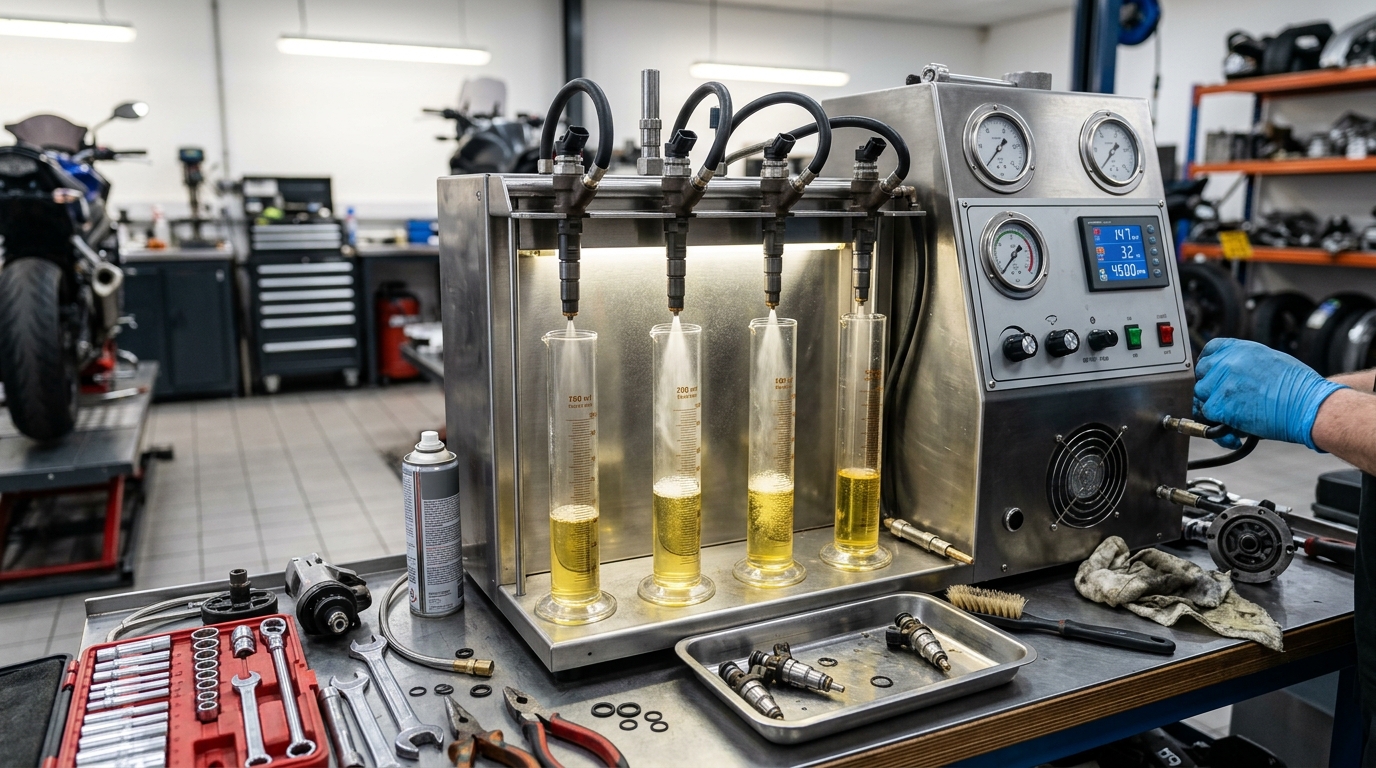
Fuel injectors need to deliver a clean, even spray. When deposits build up, the spray pattern may become uneven. The engine may still run, but it can feel rough, lazy, or inconsistent. Riders may notice hesitation when rolling on the throttle, unstable idle, poor starting, or weak acceleration.
Injector problems can feel like several different issues. A rider may blame the spark plugs, ECU, exhaust, or fuel map when the real problem starts with inconsistent fuel delivery. That is why testing matters. Guessing can waste money and time.
Professional cleaning and testing can help confirm whether the injectors flow evenly. It can also reveal whether one injector behaves differently from the others. Clifford Cycles highlights fuel injection tuning and cleaning support on its Fuel Systems page, which fits directly with this type of service.
Old fuel and storage can make symptoms worse
Motorcycles that sit for weeks or months can develop fuel-related problems. Old fuel may leave deposits, absorb moisture, or create starting issues. A bike that ran well last season may feel rough after storage if the fuel system needs attention.
Before replacing expensive parts, riders should look at the simple possibilities first. Fuel quality, filters, plugs, battery health, injector condition, and basic service history can all affect how the engine responds.
Fuel choice still matters after tuning
A good tune cannot fully overcome the wrong fuel. Riders should use fuel that matches the motorcycle manufacturer’s guidance and avoid fuel choices that the bike was not designed to handle. This matters even more for older motorcycles, performance engines, and machines that sit between rides.
If fuel choice has been confusing, read Clifford Cycles’ guide on E15 motorcycle fuel in 2026. Pump labels matter because not every fuel blend suits every motorcycle.
Exhaust changes often require better fuel mapping
Many riders upgrade the exhaust for sound, style, weight savings, or performance. The problem comes when airflow changes but fueling does not. A motorcycle may run too lean in some areas, too rich in others, or feel uneven during normal riding.
Common signs include popping, surging, heat, flat spots, throttle jerkiness, or a bike that feels strong at wide-open throttle but unpleasant in daily riding. A proper fuel map should improve the whole riding experience, not only the dyno chart number at the top.
Dyno tuning gives technicians a controlled way to measure how the motorcycle behaves under load. Instead of guessing, the shop can review air-fuel behavior, throttle response, rpm range, and power delivery. Clifford Cycles also supports exhaust-related performance work through its Exhaust page.
A custom fuel map should match the real setup
Generic maps can help in some situations, but they do not always match a specific motorcycle. Two bikes with similar parts may still behave differently because of mileage, engine condition, sensor behavior, exhaust design, intake setup, fuel quality, and riding use.
A custom map gives the bike a more precise setup. Riders who use a Power Commander or similar tuning solution often want smoother throttle, cleaner midrange, and better response across the areas they actually ride most.
How Dyno Tuning Helps Riders Diagnose Performance Problems
Dyno tuning is valuable because it replaces guessing with data. A technician can see how the motorcycle performs under controlled conditions and adjust the setup based on actual behavior. This helps when a rider says the bike feels flat, jerky, hot, weak, or inconsistent.
The dyno does not only measure peak power. It can help reveal poor fueling, uneven response, weak areas in the rpm range, or changes after installing parts. A strong tune should make the motorcycle easier to ride, not only stronger on paper.
Modern tuning also needs responsibility. The EPA explains that tampering with a vehicle’s emissions control system is illegal under the Clean Air Act, and it also prohibits aftermarket devices that defeat those controls. Riders and shops should keep emissions rules in mind when planning tuning work. For more background, review the EPA resource on tampering and aftermarket defeat devices.
Good tuning starts with mechanical health
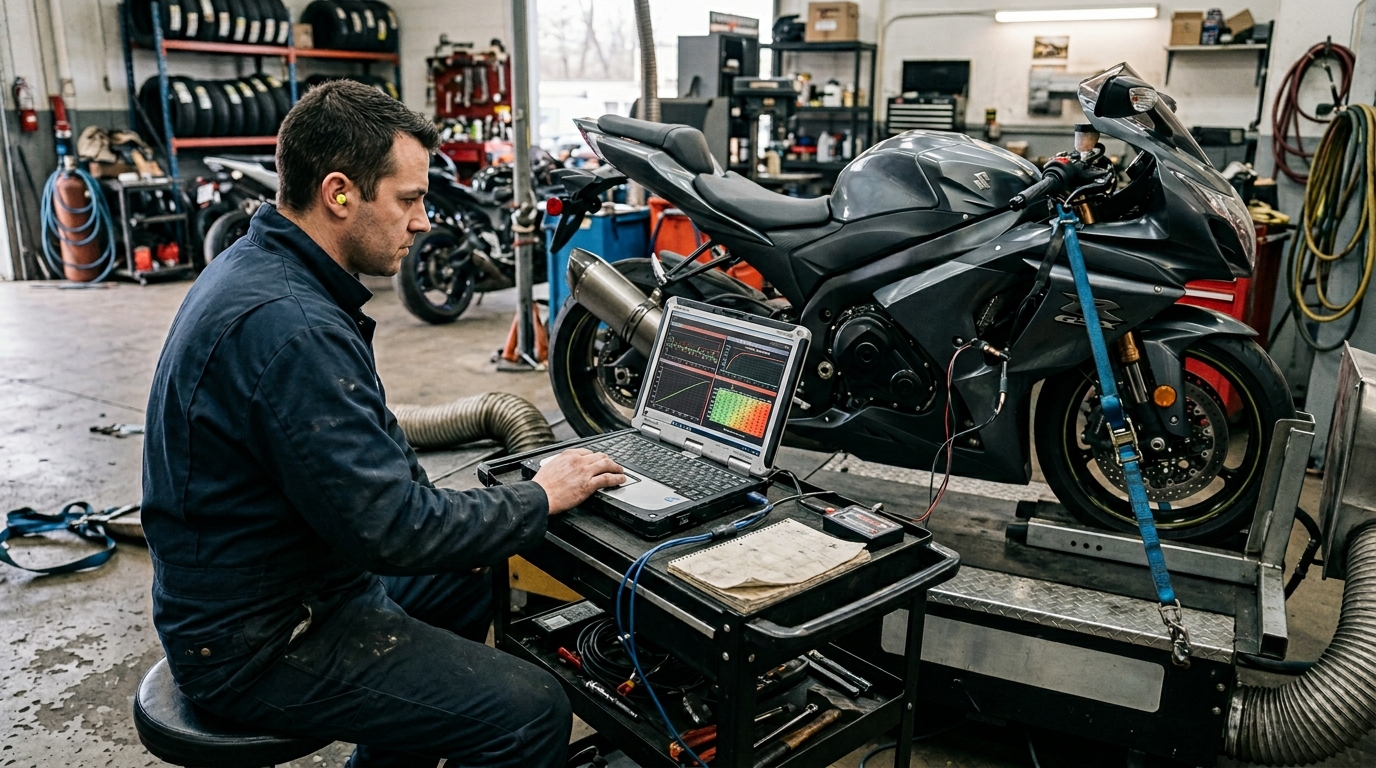
A dyno cannot fix a motorcycle that has basic mechanical problems. Before tuning, the bike should be in good condition. Tires, chain, sprockets, oil, coolant, spark plugs, air filter, battery, charging system, sensors, and fuel pressure all deserve attention.
If a motorcycle has a misfire, vacuum leak, weak battery, clogged filter, bad sensor, or failing pump, tuning around the problem can hide the real issue. A clean baseline protects the rider and helps the tune produce better results.
Electrical health also matters. Faulty wiring, weak connections, charging problems, and sensor issues can affect fuel injection performance. Clifford Cycles has related support on the Electrical page for riders dealing with diagnostic concerns.
Track bikes and street bikes need different priorities
A track bike may need sharp response, high-rpm strength, heat control, and repeatable performance. A street bike may need smooth low-speed throttle, clean idle, predictable roll-on power, and reliability in traffic. The best tune depends on the rider’s actual use.
That is why the conversation before tuning matters. A rider should explain the exhaust setup, fuel used, symptoms, riding style, recent parts, and goals. Better information helps the technician build a better plan.
Engine work can also change tuning needs. Porting, valve service, intake changes, airbox changes, or internal engine upgrades can shift airflow and fuel demand. Clifford Cycles provides engine-related services through its Engine page, making it easier to connect mechanical work with tuning support.
Fuel injection cleaning and dyno tuning also help riders avoid the common mistake of replacing parts blindly. A rider might buy plugs, coils, sensors, exhaust parts, fuel controllers, or batteries before discovering that dirty injectors or a poor map caused the issue. A proper inspection and tuning process can save money by pointing to the real problem.
For riders preparing for spring, track days, touring, or a new performance setup, timing matters. Tune after the bike has fresh maintenance and the final parts installed. If you plan to change the exhaust, intake, or fuel controller next month, wait until those changes are complete before paying for final mapping.
The smartest approach is simple: clean the fuel system, confirm mechanical health, choose the right fuel, review the exhaust and intake setup, then tune with real data. That process gives the motorcycle a better chance to run the way the rider expects.
At Clifford Cycles, performance means more than a bigger number on a chart. Smooth throttle, clean fueling, reliable response, and a bike that matches the rider’s goals all matter. Whether the motorcycle needs injector service, Power Commander fuel mapping, dyno testing, electrical diagnosis, exhaust support, or engine work, fuel injection cleaning and dyno tuning can help turn a frustrating ride into a sharper and more predictable machine.