Motorcycle brake and tire inspection should be one of the first priorities for riders in 2026. A strong engine, clean paint, upgraded exhaust, or fresh tuning setup will not matter much if the bike cannot grip the road or stop predictably. Tires and brakes are the parts that connect rider confidence to real control.
Many riders focus on horsepower, sound, and appearance before the riding season begins. Those upgrades can be exciting, but safety starts with the basics. Tire pressure, tread depth, rubber age, brake pad thickness, rotor condition, brake fluid, suspension feel, and ABS function can all affect how the motorcycle behaves in traffic, corners, emergency stops, and wet conditions.
This guide explains why motorcycle brake and tire inspection matters, what warning signs riders should watch for, and how a proper service check can help prevent avoidable problems before the first long ride of the season.
Why Motorcycle Brake and Tire Inspection Matters in 2026
Motorcycles demand more attention than cars because riders have less margin for error. A car has four tires, a cabin, seat belts, airbags, and more stability during sudden braking. A motorcycle relies on two contact patches and rider control. That makes tire grip and braking performance extremely important.
The National Highway Traffic Safety Administration says motorcycle riders continue to be overrepresented in fatal traffic crashes. NHTSA also encourages riders to stay visible, wear DOT-compliant helmets, ride sober, and understand the risks that come with sharing the road. Riders can review the official NHTSA motorcycle safety resource for broader safety guidance.
At the shop level, the lesson is simple. A rider should not wait for a scary moment to discover worn tires, weak brakes, old fluid, or an unstable setup. A careful inspection before the riding season can reveal problems early, when they are easier and cheaper to fix.
Tires control grip, steering, braking, and confidence
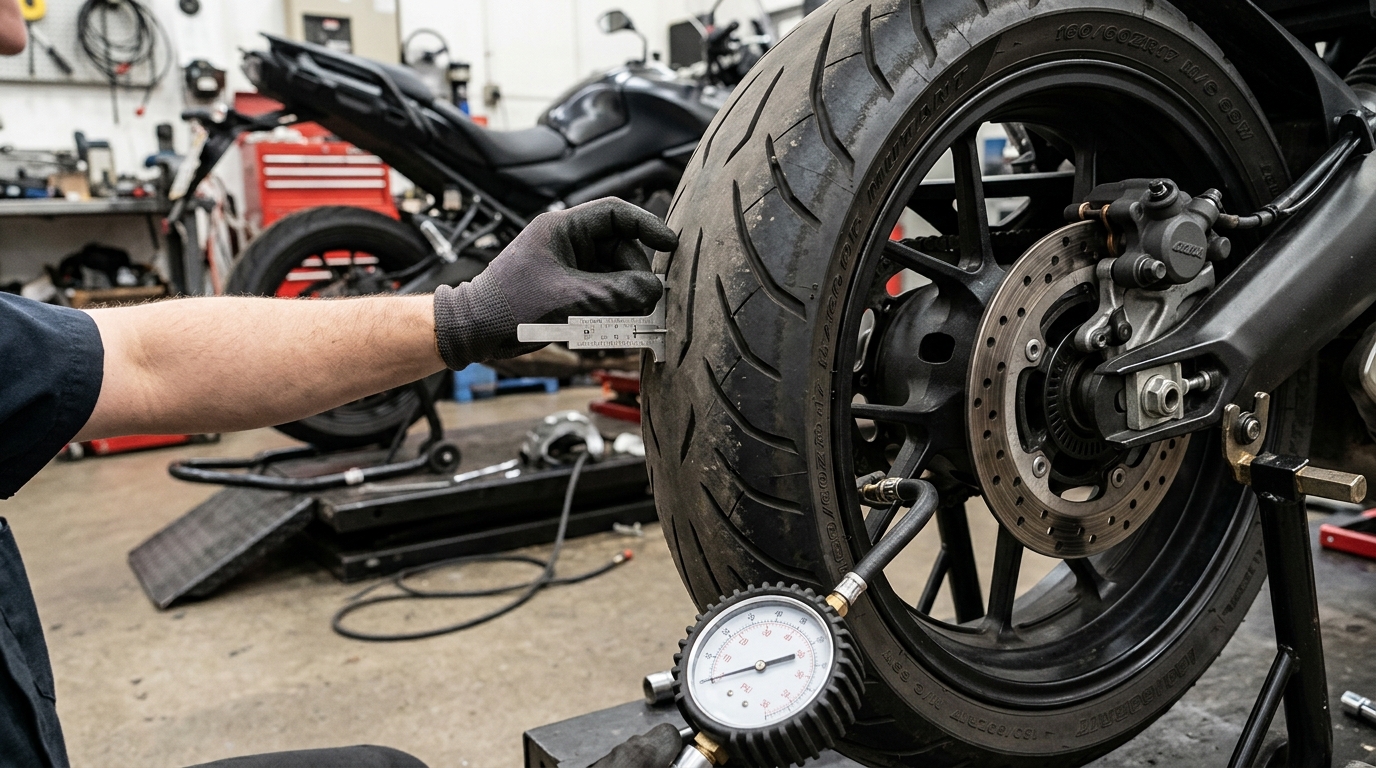
Motorcycle tires do more than roll. They help the bike steer, lean, brake, accelerate, and stay predictable over changing pavement. When tire pressure drops, the bike may feel heavy, slow to turn, or unstable. When tread wears low, wet grip can suffer. Rubber ages, the tire may lose flexibility even if the tread still looks acceptable.
A motorcycle brake and tire inspection should always begin with pressure. Riders should check pressure when the tires are cold and use the correct recommendation from the motorcycle manual or tire information label. Guessing by appearance is not enough because a tire can look fine while running several pounds low.
Tread depth also deserves attention. Look for flat spots, uneven wear, cracking, punctures, exposed cords, bulges, or sidewall damage. A tire that looks questionable should not be trusted for aggressive riding, highway speeds, or long-distance trips. Clifford Cycles supports wheel maintenance and tire-related service through its Wheels page, which fits naturally with this type of inspection.
Tire age can matter even with low mileage
Some motorcycles do not get ridden every week. A bike may sit during winter, wait between race weekends, or stay parked while the owner handles other projects. Low mileage can make the tire look better than it really is.
Rubber ages over time. Heat, sunlight, chemicals, moisture, and storage habits can weaken a tire. Sidewall cracks, stiffness, dry-looking rubber, or uneven wear should raise concern. Riders who store a motorcycle for months should inspect the tires closely before riding again.
Pressure and load change how the bike feels
Tire pressure should match the ride. A solo ride, passenger ride, loaded trip, or track-style setup may require different attention. Extra weight can affect braking distance, suspension movement, tire temperature, and steering response.
Before carrying a passenger or luggage, riders should check tire pressure, suspension settings, and braking feel. A motorcycle that feels sharp when ridden alone may feel slower to stop and heavier to turn with added weight.
Brake feel should never be ignored
Brakes tell riders a lot through feel. A healthy brake lever should feel firm, smooth, and predictable. A spongy lever, weak pedal, pulsing sensation, grinding noise, fluid leak, or sudden change in stopping power needs attention before the next serious ride.
Brake pads should have enough material left. Rotors should not show heavy grooves, cracks, warping, or extreme discoloration. Brake lines should not leak, swell, crack, or rub against moving parts. Fluid level and fluid condition also matter because old brake fluid can absorb moisture and reduce performance under heat.
Riders often notice brake issues during the first few rides of the season. The better move is to inspect the system before traffic, speed, or emergency braking exposes the problem. Clifford Cycles already covers broader pre-ride checks in its motorcycle safety checklist, which is a helpful support article for this topic.
ABS helps, but it does not replace maintenance
Anti-lock braking systems can help prevent wheel lock during hard braking, especially when a rider reacts suddenly or the surface is slippery. Still, ABS cannot fix worn tires, contaminated pads, old brake fluid, poor suspension setup, or bad rider habits.
A rider should treat ABS as support, not as permission to ignore maintenance. If the ABS warning light stays on, the bike needs diagnosis. The tires lack grip, ABS may work harder than it should. If the brake system has mechanical problems, electronics cannot create perfect stopping power.
How Riders Can Prepare Brakes, Tires, and Chassis Before the Season
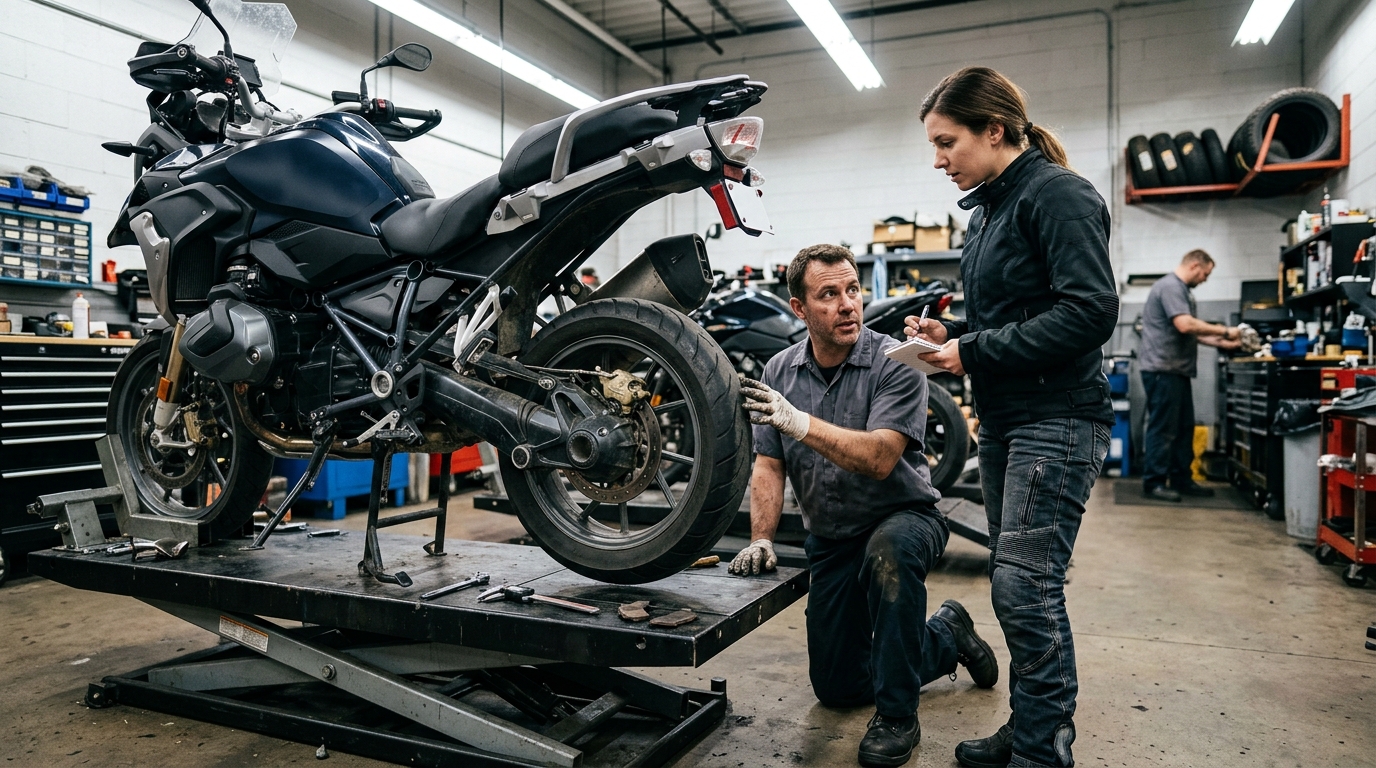
A good inspection should look at the motorcycle as a complete system. Tires, brakes, suspension, wheels, controls, fluids, and rider setup all affect each other. A bike with fresh tires but poor suspension can still feel unstable. Strong brake pads with old fluid may still fade. A tuned engine with neglected tires can quickly become a risk.
Start with a visual check, then move to feel. Look for visible damage, leaks, loose parts, and wear. After that, test brake lever feel, throttle return, clutch feel, steering movement, and suspension response. Any change from the bike’s normal behavior deserves attention.
For riders who want professional help, the Motorcycle Services page explains Clifford Cycles’ support for all makes service, dyno tuning, fuel injection tuning, machine shop work, suspension valving, and same-day ride-in tire changes.
Suspension setup can affect braking and tire wear
Suspension plays a larger role than many riders realize. The front end dives too much under braking; the bike may feel unstable. Rear shock sits too low, the motorcycle may steer poorly. If preload, sag, rebound, or compression settings do not match the rider, the tires may wear unevenly or lose grip sooner.
A motorcycle brake and tire inspection becomes more useful when suspension gets included. Look for leaking fork seals, damaged shock components, loose fasteners, poor sag, or strange bouncing. If the bike feels harsh, vague, unstable, or slow to recover after bumps, the chassis may need setup work.
This connects with Clifford Cycles’ article on motorcycle suspension setup in 2026. Modern electronics can help, but they cannot overcome worn tires, poor geometry, neglected suspension, or incorrect setup for the rider’s weight and riding style.
Road riders and track riders need different checks
A commuter, weekend rider, canyon rider, touring rider, and track-day rider do not use tires and brakes the same way. Street riders need predictable grip across cold mornings, rain, rough pavement, and traffic. Track riders may need more heat management, tire inspection between sessions, and more frequent brake checks.
Riding style changes wear. Hard braking, aggressive cornering, long highway trips, poor pressure habits, and extra weight can all shorten tire life or expose brake weaknesses. Riders should match inspection frequency to how they actually use the bike.
Electrical and fuel system health also matter before longer rides. A motorcycle with dim lights, charging problems, rough idle, or hesitation may need additional service. Clifford Cycles has related pages for Electrical diagnostics and Fuel Systems, which can support a complete readiness check.
Riders should also think about fuel quality before the season begins. Old fuel, rough running, or wrong fuel choice can create performance problems that feel like tuning issues. The Clifford Cycles guide on E15 motorcycle fuel in 2026 explains why riders should read pump labels carefully and avoid fuel that does not match motorcycle guidance.
The smartest habit is to inspect before the ride, not after the problem appears. Check tire pressure, tread, age, sidewalls, valve stems, brake pads, rotors, fluid, lever feel, brake lines, suspension, lights, and controls. A short inspection can prevent a long delay, an expensive repair, or a dangerous ride.
Motorcycle brake and tire inspection is not only a spring task. Riders should repeat it before long trips, after storage, after hard rides, before track events, and anytime the motorcycle feels different. Tires and brakes are too important to leave to chance.
At Clifford Cycles, the goal is precision, performance, and rider confidence. Whether a motorcycle needs tires, brakes, suspension setup, fuel system support, dyno tuning, or deeper service, the best time to catch a problem is before the next ride. A motorcycle that grips well, stops predictably, and feels stable gives every rider a stronger foundation for the road or track.