A smart used motorcycle buying guide should start with a warning: a clean-looking motorcycle is not always a good motorcycle. Fresh plastics, polished paint, and a loud exhaust can hide worn tires, weak charging systems, poor fuel mapping, damaged wheels, bad bearings, old fluids, hidden crash damage, or expensive engine problems. In 2026, more riders are shopping for used bikes because new motorcycles, financing, insurance, and upgrades can get expensive fast.
Buying used can be a great move. A well-maintained motorcycle can deliver years of reliable riding at a lower price than a new model. But buying the wrong used bike can drain your budget quickly. One overlooked repair can turn a “good deal” into a money pit. That is why a pre-purchase inspection matters before money changes hands.
At Clifford Cycles, used bike sales, motorcycle service, same-day tire changes, dyno tuning, fuel injection tuning, injector cleaning, chassis setup, and engine building all connect to the same goal: helping riders make better decisions. Whether you want a street bike, sportbike, track bike, cruiser, or performance project, the motorcycle should be inspected before you trust it on the road.
What a Used Motorcycle Buying Guide Should Help You Check First
The first step in any used motorcycle buying guide is separating excitement from inspection. Many riders fall in love with the sound, color, or price before checking the bike properly. Sellers may say the motorcycle “runs great,” “just needs a tune-up,” or “only needs a battery.” Sometimes that is true. Sometimes those phrases hide deeper issues.
A used motorcycle inspection should look at safety, reliability, performance, and hidden repair costs. The basics include tires, brakes, chain and sprockets, lights, controls, fluids, suspension, frame condition, wheel condition, leaks, charging system, engine behavior, throttle response, clutch feel, shifting, and warning lights. A serious inspection should also consider service history, modifications, and whether the bike was maintained by someone who understood the machine.
Tires, brakes, chain, and sprockets tell a real story
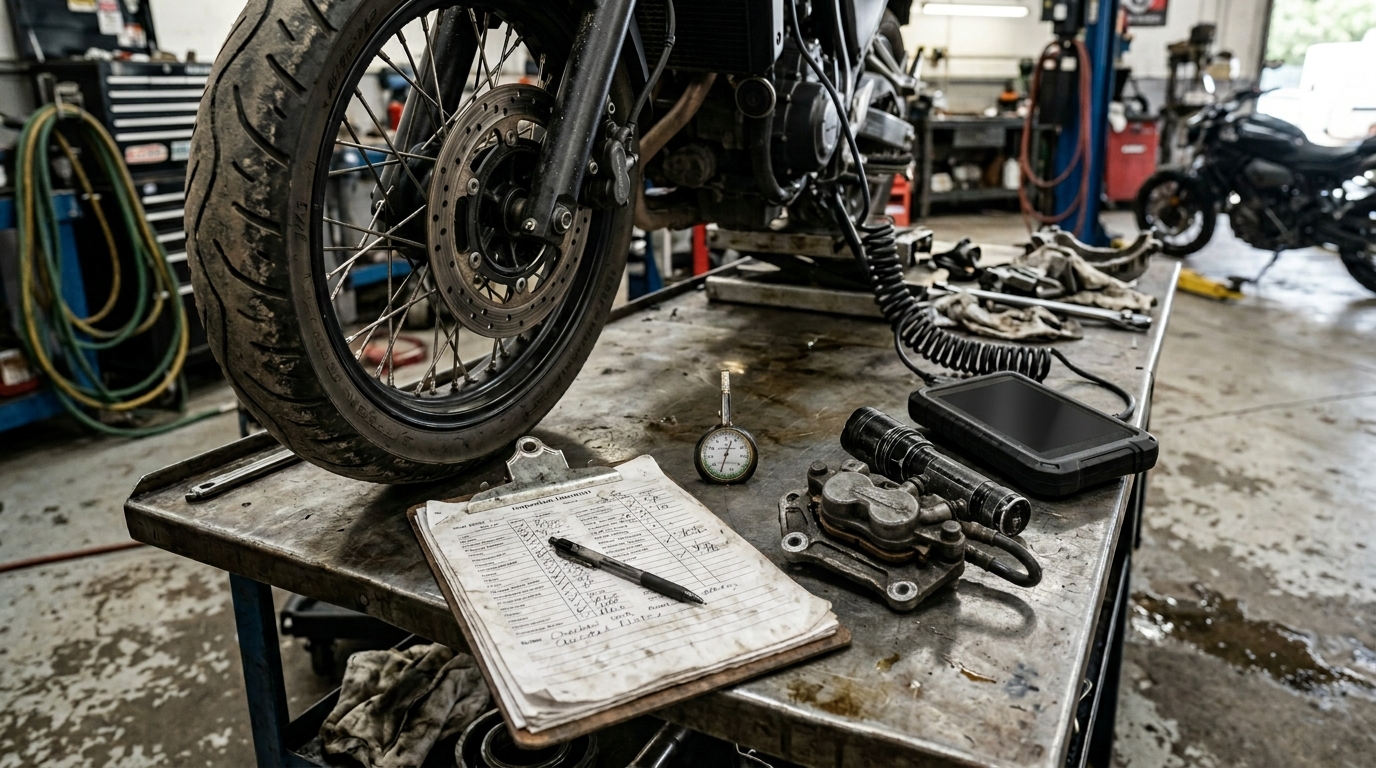
Tires are one of the fastest ways to judge how a motorcycle has been treated. Look for low tread, flat spots, cracking, cupping, puncture repairs, sidewall damage, uneven wear, or tires that are simply too old. A bike can look clean and still need a full tire replacement before it is safe to ride. If the tires are worn unevenly, the issue may also point toward suspension, alignment, riding style, or neglect.
Brakes should feel firm and predictable. Check the pads, rotors, brake fluid, lines, and calipers. A soft lever, pulsing feel, noisy braking, or uneven rotor wear can mean repairs are coming. The chain and sprockets also matter. A stretched chain, hooked sprocket teeth, tight spots, rust, or poor adjustment can reveal lack of maintenance.
Why worn tires can ruin a good deal
Used bike buyers often focus on engine sound and mileage, but tires can change the real cost of the purchase immediately. If the motorcycle needs new tires, mounting, balancing, valve stems, and related service, the price should reflect that. Clifford Cycles offers motorcycle tire service and same-day tire changes, which makes tire condition a practical inspection point, not just a safety concern.
Riders should also review tire size and tire type. A bike with the wrong tire profile may handle poorly. A track-focused tire may not be ideal for street riding. A touring tire may not match aggressive sport riding. For more detail, riders can connect this topic to Choosing the Right Motorcycle Chain and Sprockets for Peak Performance, because drivetrain condition and tire grip both affect how the bike accelerates, handles, and feels.
Why drivetrain wear should never be ignored
A worn chain and sprocket set is not just noisy. It can create poor throttle response, uneven power delivery, vibration, and safety risks. If a chain is badly neglected, it can damage other components or fail while riding. A pre-purchase inspection should check chain slack, lubrication, sprocket teeth, alignment, and signs of abuse.
Drivetrain condition can also reveal the type of owner the bike had. A rider who ignores the chain may also ignore oil changes, brake service, valve checks, and coolant. That does not automatically mean the bike is bad, but it does mean the buyer should inspect deeper before accepting the seller’s story.
Engine, fuel injection, and electrical issues can get expensive
Engine condition is one of the biggest concerns when buying used. A motorcycle may start easily but still have internal wear, poor compression, overheating history, valve issues, oil leaks, or fueling problems. Listen for knocking, ticking, rattling, smoke, rough idle, hard starting, overheating, or hesitation under throttle. Check for leaks around the engine, fork seals, coolant hoses, fuel lines, and gaskets.
Fuel-injected motorcycles need special attention. A bike that idles poorly or hesitates may need injector cleaning, sensor diagnosis, throttle body service, fuel pump testing, or proper tuning. If the motorcycle has an aftermarket exhaust, intake, or fuel controller, it may need custom fuel mapping to run correctly. A bike can sound aggressive but still be poorly tuned.
This is where Clifford Cycles’ fuel injection tuning and cleaning services matter. Riders who want a performance bike should not rely only on a test ride around the block. A proper inspection can reveal whether the motorcycle is healthy, poorly mapped, or hiding a deeper issue.
Warning lights are not minor details
Check engine lights, ABS lights, traction control warnings, battery lights, and other dashboard alerts should never be dismissed casually. A seller may say the warning light is “just a sensor,” but that needs to be proven. Modern motorcycles rely on electronics, sensors, charging systems, fuel injection, and control modules. A small warning light can point to a cheap fix, but it can also signal an expensive problem.
A proper diagnostic scan can help identify stored codes, active faults, and system issues. For riders comparing multiple used motorcycles, diagnostics can make the difference between buying confidently and guessing. This connects directly to Clifford Cycles’ broader service work, including motorcycle diagnostics, electrical service, dyno tuning, and performance setup.
Why a Pre-Purchase Inspection Is Worth It Before You Buy
A pre-purchase inspection is not about being negative. It is about being realistic. The seller wants to sell. The buyer wants a good deal. A technician’s job is to inspect the motorcycle objectively. That protects the buyer from emotional decisions and gives both sides clearer information.
The Motorcycle Safety Foundation’s T-CLOCS checklist is a useful outside reference because it reminds riders to inspect Tires and Wheels, Controls, Lights and Electrics, Oil and Other Fluids, Chassis, and Stands. You can review the official checklist here: Motorcycle Safety Foundation T-CLOCS Pre-Ride Inspection Checklist.
What a professional inspection can reveal
A professional inspection can reveal problems a casual buyer may miss. That includes bent wheels, leaking fork seals, worn bearings, weak charging output, poor brake condition, bad tires, dirty injectors, loose steering head bearings, damaged wiring, poor clutch adjustment, frame damage, missing hardware, incorrect parts, or unsafe modifications.
A shop inspection can also help estimate the real cost of ownership. A motorcycle priced below market may still be expensive if it needs tires, brakes, chain and sprockets, fluids, fork service, battery, fuel system work, and electrical diagnosis. On the other hand, a bike with a higher asking price may be the better value if it is clean, serviced, documented, and ready to ride.
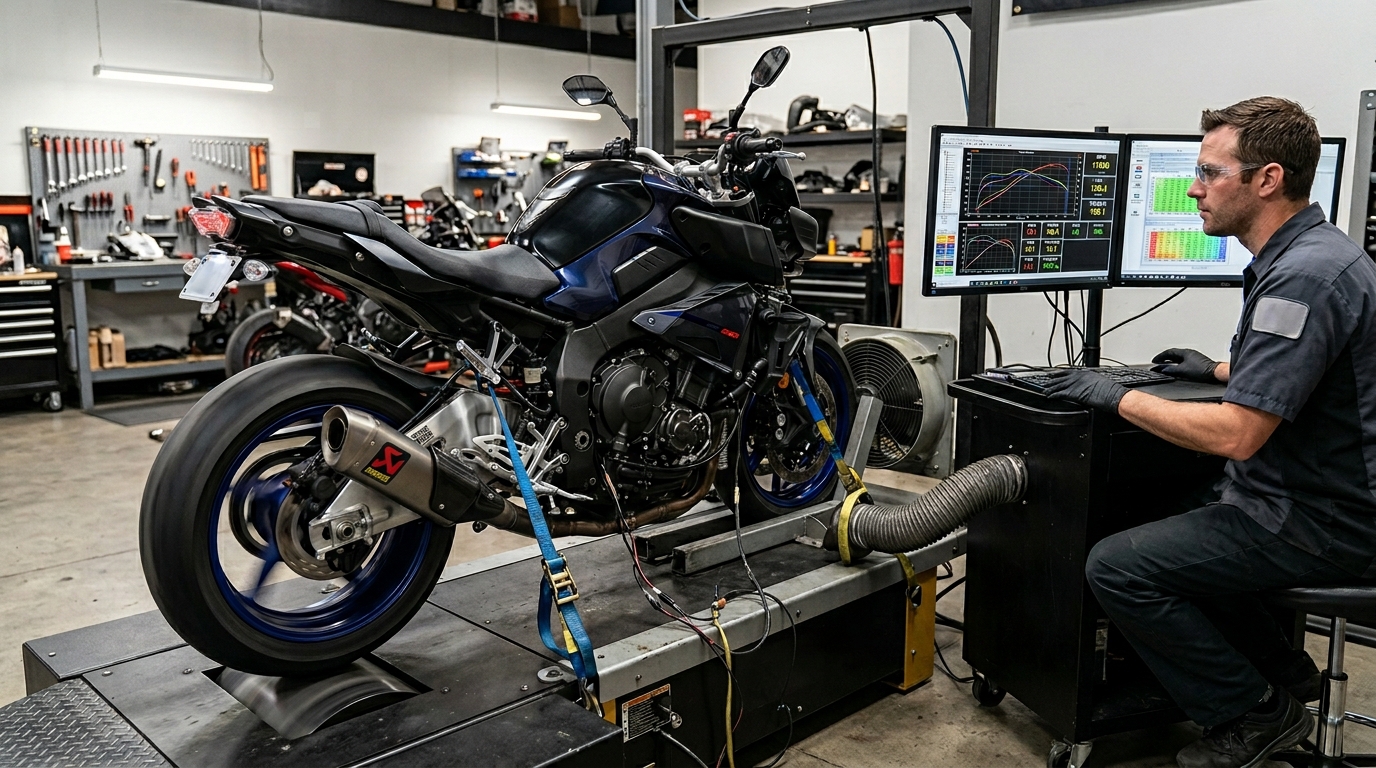
For performance-minded buyers, dyno testing can add another layer of confidence. A dyno session can show power delivery, air-fuel behavior, throttle response, and possible weak spots. It is not only about horsepower. It is about whether the motorcycle runs cleanly and consistently under load.
Dyno testing can protect performance buyers
Used sportbikes, modified motorcycles, and track bikes deserve extra caution. Many have aftermarket exhausts, fuel controllers, engine work, gearing changes, or aggressive riding history. Some are well-built. Others are poorly modified. A dyno test can help show whether the motorcycle performs as expected or whether the tune needs work.
Buyers interested in reduced friction and performance efficiency may also read Ceramic Bearings vs. Steel Bearings. Wheel condition, bearing health, drivetrain efficiency, tire setup, fueling, and engine performance all shape how a motorcycle feels after purchase.
A strong used motorcycle buying guide should help riders slow down before making a fast decision. Do not buy only because the bike looks clean. Trust every modification as an upgrade. Do not ignore warning lights. Not assume a cheap bike is actually cheap after repairs. Check the parts that affect safety, then check the parts that affect reliability and performance.
Used motorcycles can be excellent purchases when they are inspected properly. A good bike should feel stable, start cleanly, shift smoothly, brake confidently, charge correctly, run at proper temperature, and respond predictably. If the bike fails those basics, the price should reflect the repair risk.
Before buying your next used motorcycle, schedule a proper inspection, ask for service records, review the bike’s condition honestly, and calculate the real cost of making it road-ready. A pre-purchase inspection can save riders thousands because it reveals problems before they become your problems.