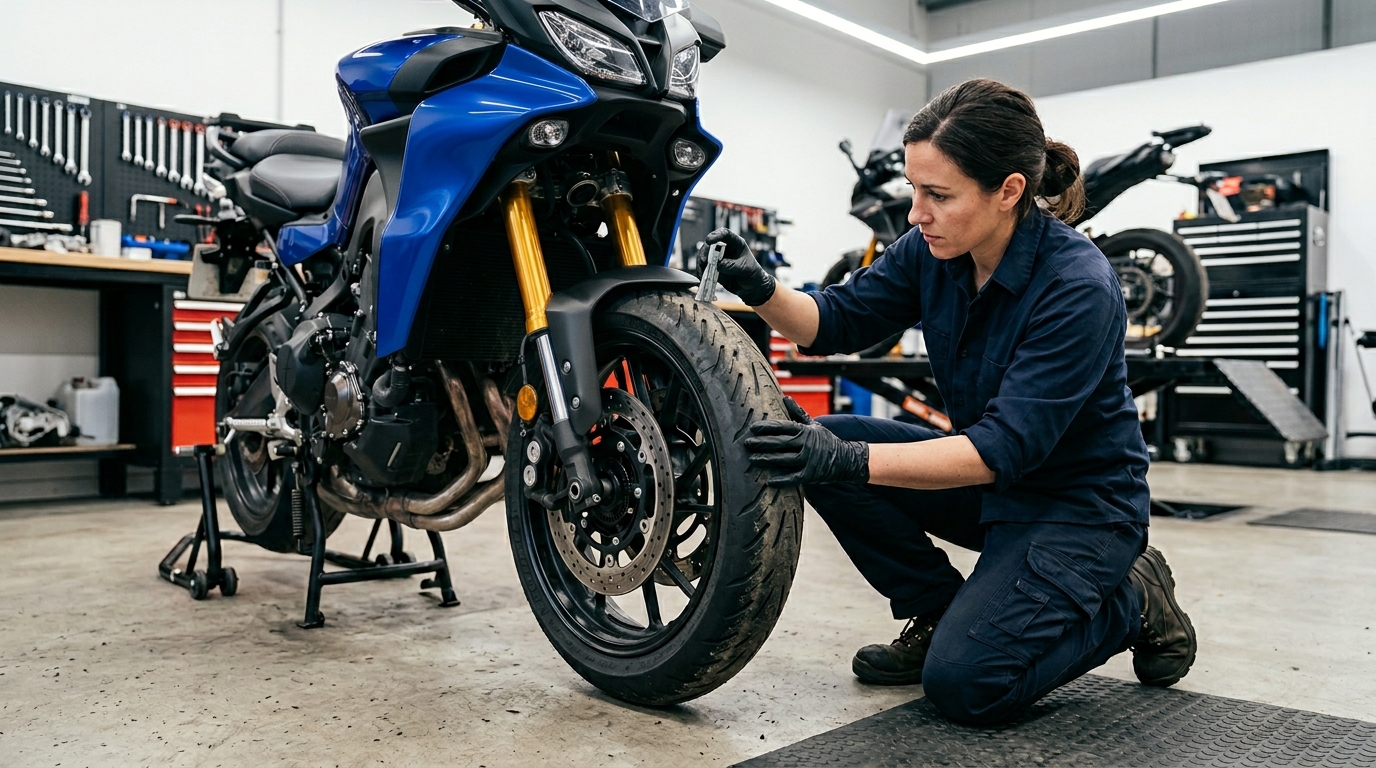
Motorcycle tire replacement is one of the most important maintenance topics for riders in 2026 because tires decide how the bike accelerates, brakes, turns, and responds when the road is imperfect. A motorcycle only has two small contact patches touching the pavement. If those contact patches are worn, old, underinflated, or damaged, every other upgrade on the bike becomes less useful.
Many riders spend money on exhausts, tuning, suspension, chains, sprockets, and appearance upgrades before they think seriously about tires. That is backward. Tires are not just another replacement part. They are the connection between the rider, the motorcycle, and the road. If you ride on old rubber, squared-off tread, hidden punctures, or incorrect pressure, you are asking the bike to perform with less grip than it needs.
This topic fits naturally with Clifford Cycles because the shop already focuses on performance, maintenance, racing support, wheel service, and same-day ride-in tire changes. If you are preparing for the riding season, start with the motorcycle safety checklist, then use this guide to decide whether your tires are still road-ready or due for replacement.
Why Motorcycle Tire Replacement Is a 2026 Rider Priority
Motorcycle ownership is getting more expensive, and riders are becoming more selective about where they spend money. That makes tire decisions even more important. A fresh, correct tire can improve confidence, braking feel, cornering response, wet-road stability, and overall ride quality. A bad tire can make a good motorcycle feel vague, nervous, heavy, or unsafe.
The trend is also practical. Riders are keeping bikes longer, maintaining used motorcycles more carefully, and choosing upgrades that give clear value. Tires fit that mindset because they affect both safety and performance. You do not need to chase the most expensive tire on the shelf, but you do need the right tire for your bike, riding style, load, and road conditions.
Grip is not only about tread depth
A tire can have visible tread and still be wrong for the bike. Rubber hardens with age. Heat cycles change the feel. Poor storage can dry out sidewalls. A tire that sat for years can look decent at a glance but lose flexibility and grip. That matters most when the road is cold, wet, sandy, or uneven.
Tread depth is still important, but it is only one part of the inspection. Look for cracking, weathering, flat spots, punctures, bulges, scalloping, cupping, and uneven wear. If the tire has cords showing, deep cuts, sidewall damage, or a strange shape, the decision is easy: replace it before riding again.
1. Check tire pressure when the tires are cold
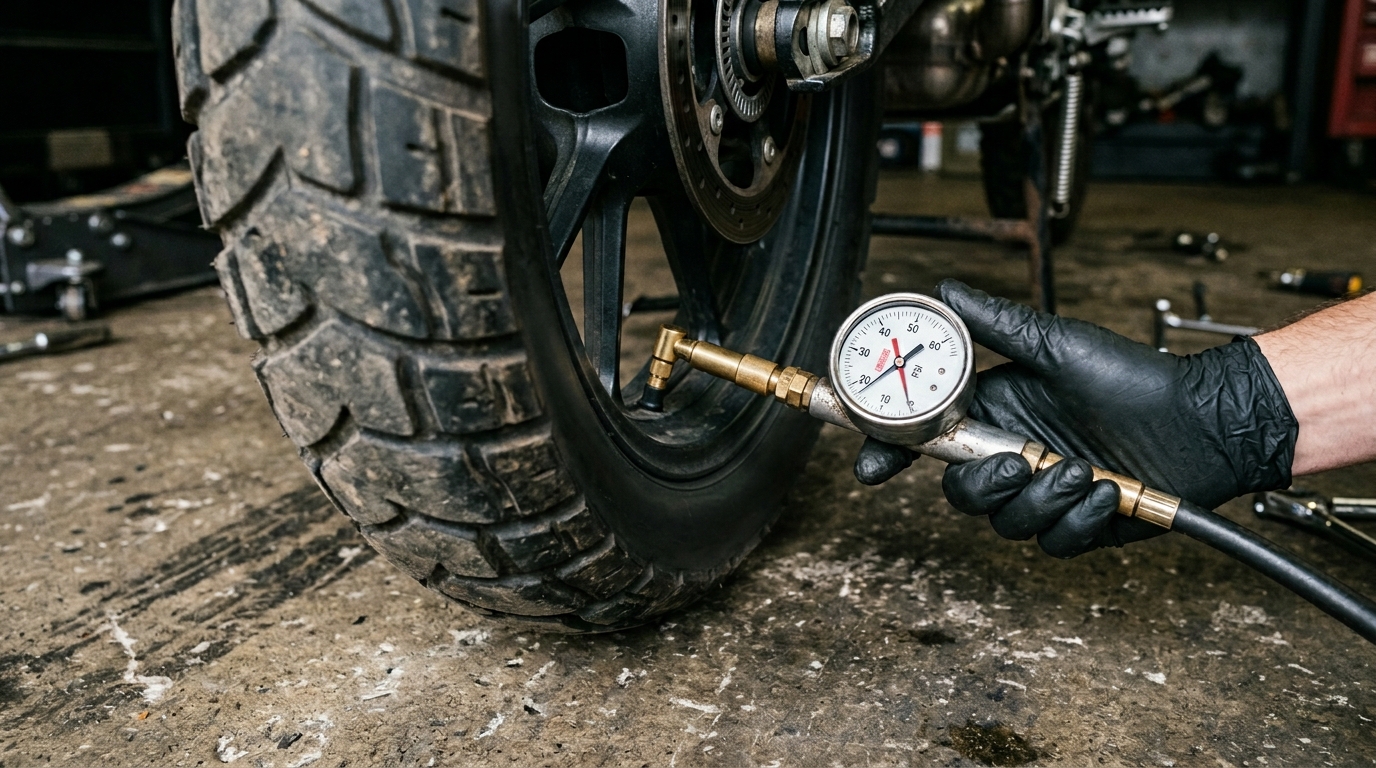
Low pressure is one of the fastest ways to make a motorcycle feel wrong. It can cause heavy steering, extra heat, poor fuel economy, uneven wear, and reduced stability. Overinflation can also create problems by reducing the tire’s ability to absorb bumps and maintain proper contact with the road.
Check pressure before the ride, not after the tire is hot. Use the motorcycle manufacturer’s recommended pressure and adjust for passenger weight, luggage, or track use when appropriate. Do not rely on the sidewall number as your normal setting. That number is usually a maximum rating, not a custom setup for your motorcycle.
2. Match tire choice to how you actually ride
A commuter, cruiser rider, sportbike rider, touring rider, track-day rider, and micro sprint racer do not need the same tire. The best tire is the one that matches the job. A tire built for mileage may not offer the same aggressive grip as a sport tire. A sticky performance tire may wear faster than a touring tire. A track-focused tire may not warm up properly during relaxed street riding.
Be honest about your riding. If you mostly ride weekend backroads, choose a tire that handles real street conditions. If you ride long distances, think about wet grip, comfort, load rating, and wear life. If you are preparing for performance use, talk with a shop that understands suspension, chassis setup, and tire behavior together.
Warning signs your motorcycle tires need attention
Motorcycle tires usually give warning signs before they become dangerous. The bike may feel slow to turn, unstable in corners, harsh over bumps, or nervous at highway speed. You may notice vibration, wobble, tramlining, or a tendency to follow grooves in the road. Braking may feel less planted, especially in wet conditions.
Visual signs matter too. A squared-off rear tire can make corner transitions feel awkward. Cupped or scalloped front tires can create noise, vibration, or uneven steering feel. Cracks near the sidewall or tread grooves are a red flag. Embedded objects, leaking valve stems, damaged rims, or missing valve caps should also be handled before the next ride.
3. Do not ignore uneven tire wear
Uneven tire wear is not only a tire problem. It may point to suspension setup, wheel balance, alignment, bearing issues, braking habits, or incorrect pressure. Replacing the tire may solve the symptom for a while, but the same wear pattern can return if the cause is still there.
This is where a full inspection helps. Clifford Cycles’ wheel maintenance and tire installation services connect directly with tire safety because balancing, bearings, rims, and proper mounting all affect how the motorcycle feels. If a new tire still feels strange, look beyond the rubber.
How to Build a Smarter Tire Maintenance Plan
A smarter tire plan starts before the tire is completely worn out. Waiting until the bike handles badly is not a strategy. Riders should inspect tires before the riding season, before long trips, after storage, after hard impacts, and anytime the bike feels different. A five-minute inspection can prevent a ruined ride or a dangerous surprise.
The Motorcycle Safety Foundation’s T-CLOCS checklist places tires and wheels first, including condition, tread depth, wear, weathering, air pressure, wheels, rims, spokes, and bearings. That is a strong reminder that tire inspection is not optional. You can review the official checklist here: Motorcycle Safety Foundation T-CLOCS Pre-Ride Inspection Checklist.
When to replace tires before they become a problem
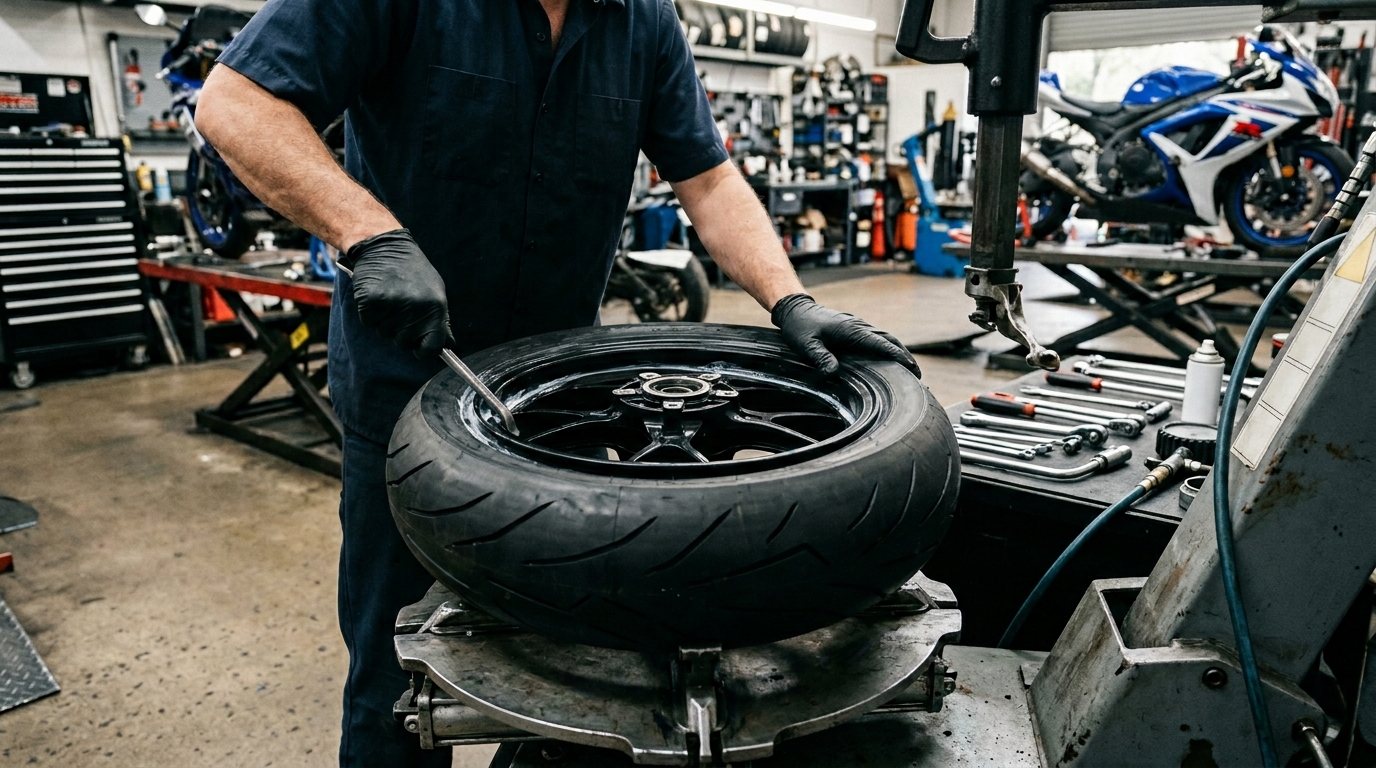
Replace motorcycle tires when tread is too low, damage is visible, sidewalls are cracked, rubber is aging, the tire will not hold pressure, or the bike’s handling changes in a way that points to tire condition. You should also replace tires before a long trip if they are already close to the end. A tire that looks “good enough” in the garage may not be good enough after hundreds of miles, hot pavement, rain, and loaded luggage.
If the motorcycle has been sitting, use the spring motorcycle maintenance checklist with a tire-focused mindset. Storage can lower pressure, create flat spots, and expose weak rubber. Do not assume low mileage means the tire is healthy.
4. Pair new tires with the right supporting checks
A proper tire replacement should include more than removing one tire and installing another. Check valve stems, wheel bearings, rim condition, brake pads, rotors, axle hardware, spacers, chain adjustment, and suspension behavior. If the rear wheel is removed, it is a good time to inspect drive components too. Riders planning sprocket changes can also review choosing the right motorcycle chain and sprockets.
After installation, ride carefully while the tire settles in. Avoid aggressive lean angles, hard braking, and sudden acceleration during the first miles. Make sure pressure is correct, listen for unusual vibration, and pay attention to handling. If something feels off, stop and get it checked.
Motorcycle tire replacement in 2026 is not about chasing trends for the sake of spending money. It is about protecting the part of the bike that makes every ride possible. Fresh, properly chosen, correctly mounted, and well-maintained tires help the motorcycle feel predictable. That predictability gives riders confidence.
For street riders, that confidence means safer commuting and better weekend rides. For performance riders, it means more useful feedback from the chassis. For racers and micro sprint teams, it means every setup decision starts from a stronger foundation. If your tires are old, damaged, worn unevenly, or not right for your riding style, replace them before they force the issue.
Clifford Cycles supports riders with motorcycle services, wheel maintenance, tire installation, parts, tuning, chassis setup, and performance-minded guidance. Before your next ride, check the tires first. The best upgrade may not be louder, flashier, or more complicated. It may simply be the right rubber, installed correctly, at the right pressure.