Chain-drive motorcycles translate engine power through several wear components. A basic visual check helps riders notice concerns, but adjustment and replacement must follow the service manual.
This guide focuses on the choices readers can verify, the mistakes that create unnecessary risk, and the records or instructions worth checking before they act. Details differ by person, location and equipment or legal setting. Use current primary sources for anything that could change after publication.
Understanding motorcycle chain and sprocket wear before making a decision
A motorcycle chain and sprocket system works only when the chain, front sprocket and rear sprocket engage smoothly. Dirt, poor lubrication, incorrect tension and worn teeth can accelerate deterioration. Omaha riders often face dust, summer heat and seasonal storage, so maintenance habits should reflect both road use and the manufacturer’s instructions. Never assume one chain tension number applies to every model.
Chain maintenance is easiest when it becomes part of a consistent pre-ride routine. Look for obvious damage while checking tires and lights, and schedule more detailed work at the manufacturer’s recommended intervals. This keeps the task manageable rather than letting it become an occasional emergency. Routine checks also make it easier to notice when a noise or amount of slack has changed from normal.
Identify the facts and limits first
Chain slack is not measured by guessing how far the chain droops in a photograph. Service manuals specify a measurement location, suspension condition and tolerance. Some motorcycles require checks on the side stand, others upright or loaded. An overly tight chain can stress bearings and suspension components, while excess slack may cause poor engagement or derailment risk.
Inspect the chain for rust, stiff links, damaged seals and inconsistent movement. A chain that has been neglected through winter storage may need more than a quick wipe and spray. Clean only with products compatible with the installed chain type, since harsh solvents can damage sealed-ring designs. Keep fingers and tools away from a moving drivetrain.
Inspect links, seals and visible corrosion
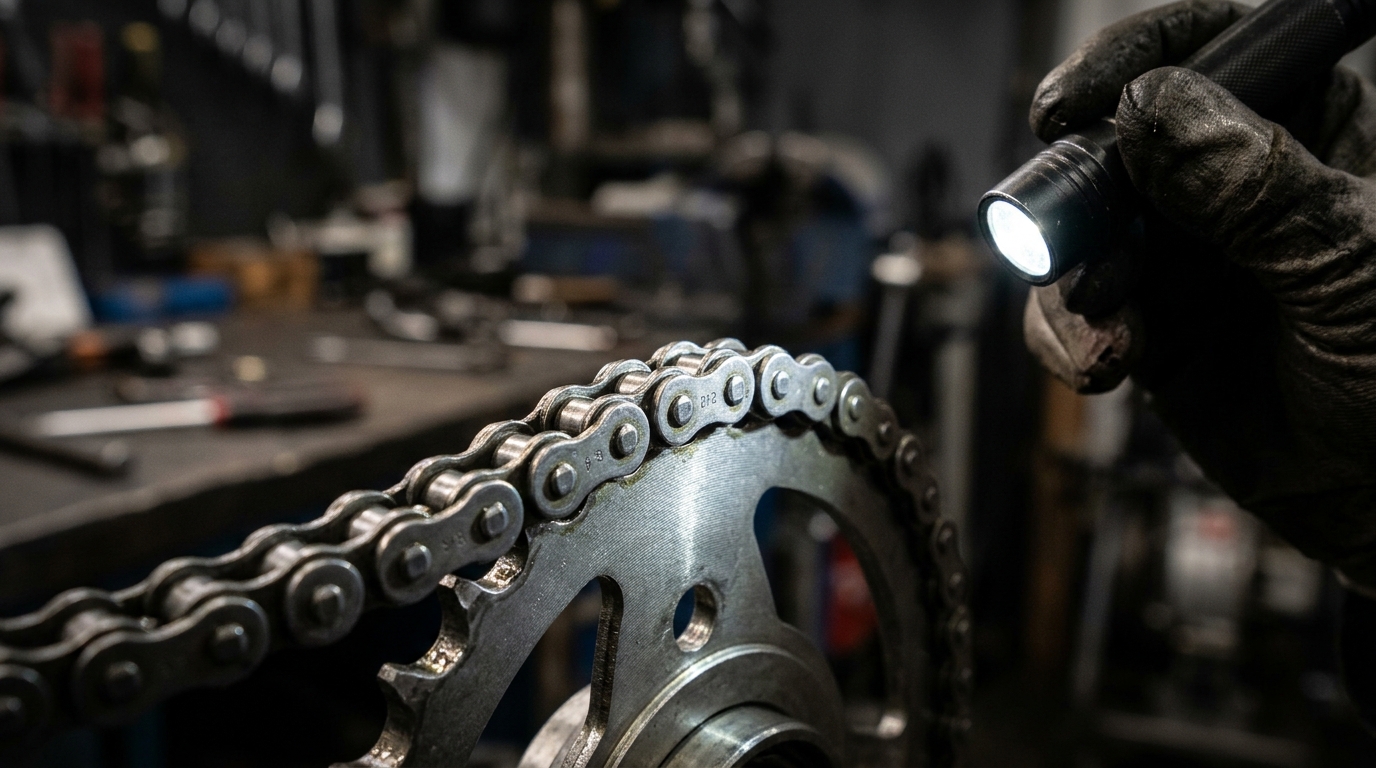
Sprocket teeth provide another clue. Severe hooking, asymmetrical wear or visibly thin teeth can signal that the drive set is reaching replacement time. Do not rely solely on tooth shape when there are symptoms such as skipping or unusual noises. A technician can assess the whole system and advise whether matched components should be replaced together.
Riders who install aftermarket rearsets, suspension components or different wheel sizes should be especially careful with drivetrain adjustment. Changes in geometry can alter the relationship between chain tension and suspension movement. A technician should evaluate the full setup rather than use a generic number from an internet forum. What works for a stock commuter may not suit a modified machine.
Measure slack using the prescribed method
Lubrication needs depend on whether the motorcycle uses a sealed chain, an automatic oiler or a manufacturer-specific setup. Dirt buildup can create an abrasive paste if products are applied carelessly. Follow the stated cleaning and drying sequence, wipe excess as directed and inspect whether lubricant reaches the relevant parts without contaminating the tire or brake.
After washing a motorcycle, examine whether water or cleaning chemicals have affected exposed chain parts. Road salt and moisture may accelerate corrosion during cold months. A warm garage is not a substitute for drying and appropriate storage. When preparing for winter, clean the drivetrain and review the manufacturer’s seasonal maintenance guidance.
Recognize where assumptions break down
Listen for changes when rolling the motorcycle by hand with the engine off. Clicking, tight spots or jerky wheel movement can suggest a problem, but sound alone is not a diagnosis. If a chain appears damaged, stop riding and get it inspected rather than trying to ‘test it at speed.’ Drivetrain failure can compromise control.
Rear wheel alignment influences how the chain tracks, yet swingarm reference marks are not always precise enough to diagnose a problem. Any adjustment requires correct torque, axle fastening and slack verification. Beginners should not attempt unfamiliar work without proper tools and repair information. The cost of professional adjustment is usually lower than the consequence of an improperly tightened axle.
For a used motorcycle, ask whether chain and sprockets were replaced together and whether the correct parts were used. Receipts provide a useful clue, but they do not guarantee installation quality. Inspect the current condition and compare it with the maintenance log. A seller’s statement that the chain was “just serviced” is not a substitute for a safe mechanical assessment.
Practical steps for motorcycle chain and sprocket wear

Some motorcycles use belts or shaft drive instead of chains. Do not apply chain-specific advice to those systems. If you are buying a used motorcycle, identify the drive type first and ask for maintenance records. A clean-looking chain can still be stretched or have damaged seals; visual appearance is only one part of inspection.
Daily commuters may benefit from checking the chain more frequently during wet, gritty periods, while occasional riders should inspect before long trips. Use mileage intervals specified in the owner’s manual as a baseline and shorten them when conditions are harsher. A calendar reminder helps, but checking after unusual noise or a hard impact is more important than a fixed date.
Evaluate evidence and next steps
Replacing sprockets with different tooth counts changes gearing and may affect speedometer readings, chain length and engine behavior. A maintenance article should not frame performance gearing as a harmless cosmetic upgrade. Check compatibility and the manufacturer guidance before changing ratios, particularly if warranty or safety systems are involved.
Never clean or lubricate the chain while the engine drives the rear wheel. Even a briefly rotating wheel can draw a hand into a sprocket. Use the procedure described in the service manual, keep the engine off and maintain proper support for the motorcycle. If a stand or adjustment method feels uncertain, a qualified shop is the safer choice.
Keep lubricant away from brake and tire surfaces
Keep a simple log of mileage, cleaning, lubrication, measurements and any replacement parts. Maintenance records are especially useful when identifying a pattern of abnormal wear. If a shop performs the work, ask which chain specification and sprocket materials were fitted, and keep the invoice for future inspection.
Ask a mechanic about skipping or tight spots
For Omaha riders, the safest chain and sprocket strategy is predictable: inspect with the engine off, follow the correct model-specific specifications and seek experienced mechanical help when wear or uncertainty appears. A chain that looks shiny is not automatically healthy; what matters is correct tension, smooth movement and reliable engagement.
Budgeting for a full drive-set replacement can be more sensible than repeatedly replacing isolated parts that are already near the end of their service life. A mechanic can explain compatible chain types, sprocket condition and labor requirements. The goal is smooth, predictable power transfer and confident riding, not choosing the lowest-cost component without regard to the system.
Practical checklist:
- Read the exact owner’s manual chain specification
- Inspect links, seals and visible corrosion
- Look for hooked or damaged sprocket teeth
- Measure slack using the prescribed method
- Keep lubricant away from brake and tire surfaces
- Ask a mechanic about skipping or tight spots
Common questions
Can every chain use the same slack range? No. Suspension designs and manufacturers specify different methods and tolerances.
Is a noisy chain always worn out? No. Noise can have several causes, but unexpected sounds justify inspection before a long ride.
Should sprockets be checked during chain replacement? Yes. A technician should inspect the complete drive set and follow model-specific service advice.
Can I clean a chain with any solvent? No. Use products compatible with the chain seals and manufacturer instructions.
For related context, see the cliffordcycles.com guide. For authoritative reference, review this primary resource and additional official or technical guidance. Verify updates, dates and jurisdiction before applying general guidance to a specific situation.
Use this guide as a starting framework rather than a promise of a particular outcome. For motorcycle chain and sprocket wear, the most useful next move is to verify the applicable details, preserve accurate information and make a decision based on the real conditions in front of you. When specialist advice, official instructions or a qualified inspection is appropriate, seek that input before a decision becomes difficult to reverse.