Advanced rider assistance systems are becoming one of the biggest motorcycle technology topics in 2026. Riders are hearing more about radar, cameras, blind-spot alerts, adaptive cruise control, forward-collision warnings, traction support, electronic suspension, smart displays, and connected riding systems. These features are no longer limited to high-end concept bikes. They are slowly moving into premium touring bikes, adventure motorcycles, sport-touring machines, electric motorcycles, and future aftermarket conversations.
For riders, this is exciting, but it can also be confusing. A motorcycle with more electronics may feel safer and more modern, but technology does not replace proper maintenance, good tires, correct suspension setup, clean electrical connections, smooth fueling, and rider awareness. The bike still needs to be mechanically sound. The rider still needs to understand the machine. The shop still needs to know how electronics, chassis setup, and performance tuning work together.
At Clifford Cycles, the conversation fits naturally with real motorcycle service. Advanced rider technology is not only about sensors and dashboards. It is also about how the motorcycle behaves when braking, accelerating, cornering, loading the suspension, or reacting to changing road conditions. This guide explains what riders should know about advanced rider assistance systems in 2026 and why maintenance still matters even when your bike has smart technology.
What Are Advanced Rider Assistance Systems?
Advanced rider assistance systems, often called ARAS, are motorcycle-focused safety and control technologies designed to support the rider. They are similar in concept to advanced driver assistance systems used in cars, but motorcycles are much harder to automate because they lean, balance, shift weight, and react more sharply to road surfaces.
Common ARAS features may include adaptive cruise control, blind-spot monitoring, forward-collision warning, rear-collision warning, hill-hold control, traction control, cornering ABS, electronic suspension adjustment, tire pressure monitoring, and camera-based alerts. Some systems are already available on select motorcycles, while others are still developing.
The National Highway Traffic Safety Administration motorcycle safety page reminds riders to check tire pressure, tread depth, brakes, lights, signals, fluid levels, leaks, cargo balance, suspension, and tire pressure before riding. That point matters because even the best rider-assistance technology depends on a motorcycle that is properly maintained.
Why Radar and Camera Systems Are Getting More Attention
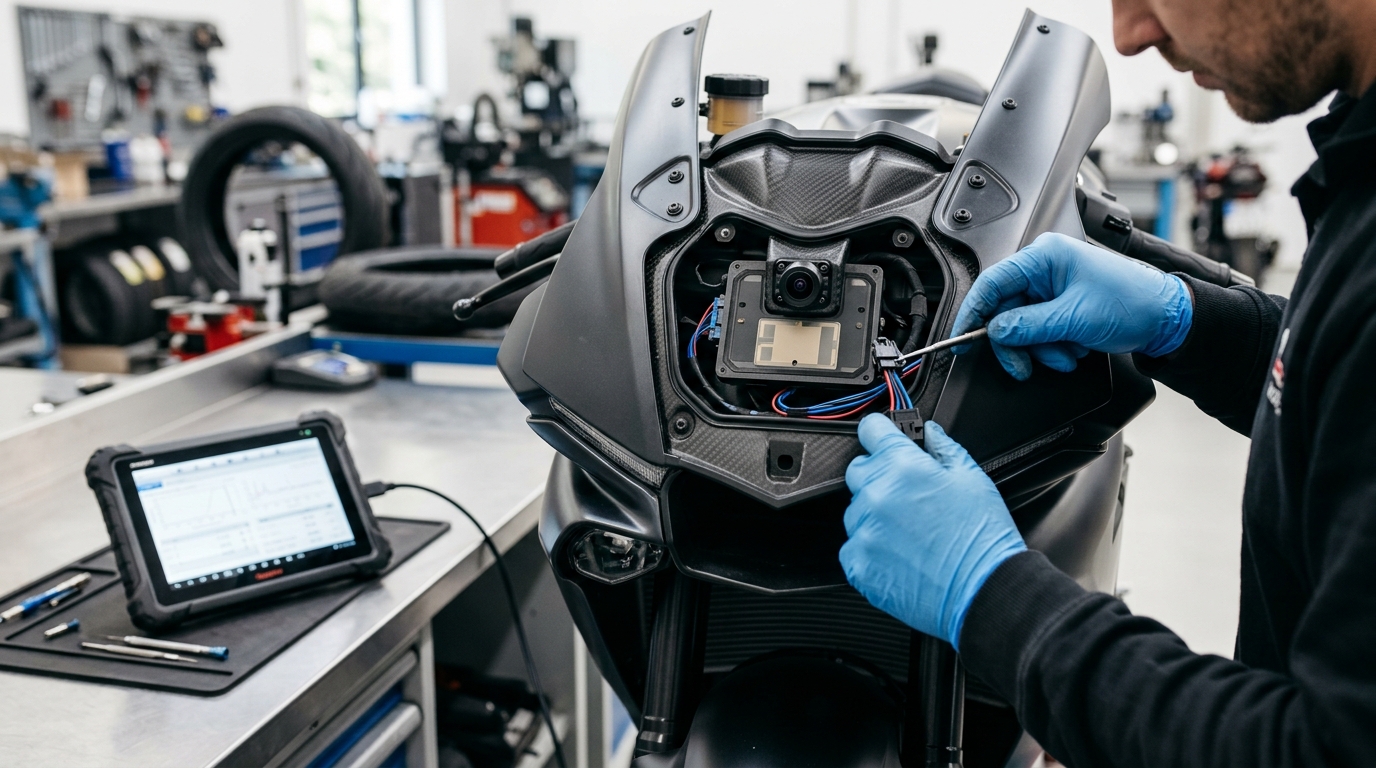
Radar and camera-based motorcycle systems are getting attention because they can help detect hazards around the bike. On a touring or sport-touring motorcycle, radar may help support adaptive cruise control or blind-spot alerts. Cameras may help with hazard recognition, rear awareness, or future rider assistance features.
Unlike cars, motorcycles have very limited space for sensors, wiring, control modules, and display systems. Every component must be protected from vibration, weather, heat, and impact. A sensor that is slightly misaligned, blocked by accessories, or affected by damaged wiring may not work as intended. That is why riders should treat advanced electronics as part of the maintenance conversation, not just as a selling feature.
Blind-Spot Alerts Are Helpful, But They Are Not a Mirror Replacement
Blind-spot alerts can help riders notice vehicles approaching from the side or rear, especially during lane changes. However, they should never replace mirror checks, shoulder checks, lane positioning, and defensive riding habits. Sensors can be limited by weather, traffic angle, vibration, dirty surfaces, or damaged wiring.
A rider who fully trusts the dashboard alert without checking traffic is using the technology the wrong way. The better mindset is simple: let the system support your awareness, but never let it replace your judgment. This is especially important on busy roads, group rides, commuting routes, and fast highway traffic.
Adaptive Cruise Control Still Needs a Well-Maintained Bike
Adaptive cruise control can help manage following distance on long rides, but it cannot fix worn tires, weak brakes, dirty brake fluid, bad suspension setup, or poor throttle response. If the motorcycle is not mechanically healthy, electronic assistance may feel inconsistent or uncomfortable.
This is where regular service still matters. Brake inspection, tire condition, chain or belt condition, fluid levels, throttle response, fuel system performance, and chassis setup all affect how the bike behaves. Riders who use modern assistance features should be even more serious about maintenance, not less serious.
How Rider Assistance Technology Connects With Tuning and Setup
Modern motorcycles are becoming more electronic, but performance still depends on the basics. Ride modes, quickshifters, traction control, ABS, throttle-by-wire, and electronic suspension all work better when the motorcycle is properly serviced and correctly set up. A bike with advanced electronics can still feel rough, unstable, or unpredictable if its mechanical condition is ignored.
This connects with Clifford Cycles’ existing article on modern motorcycle tuning in 2026. Ride modes and ECU setup are not isolated features. They affect how power is delivered, how the throttle responds, and how the rider feels connected to the machine.
It also connects with your post about motorcycle ABS and traction control in 2026. ABS and traction control are two of the most familiar rider-assistance technologies, but newer systems are expanding the conversation into radar, cameras, smart warnings, and connected control systems.
Electrical Health Matters More on Modern Motorcycles
As motorcycles become more electronic, electrical health becomes more important. Weak batteries, corroded connectors, damaged wiring, poor grounds, failing sensors, and charging system problems can create confusing symptoms. A rider may blame the ECU, dashboard, or sensor system when the real issue is a basic electrical fault.
Before adding accessories or diagnosing advanced systems, riders should make sure the motorcycle’s electrical foundation is solid. That includes the battery, charging system, fuses, wiring harness, grounds, connectors, and any aftermarket accessories already installed. Clifford Cycles’ electrical services page is a smart internal link for riders dealing with electrical performance, power delivery, or accessory concerns.
What Riders Should Do Before Buying, Upgrading, or Trusting Smart Motorcycle Tech
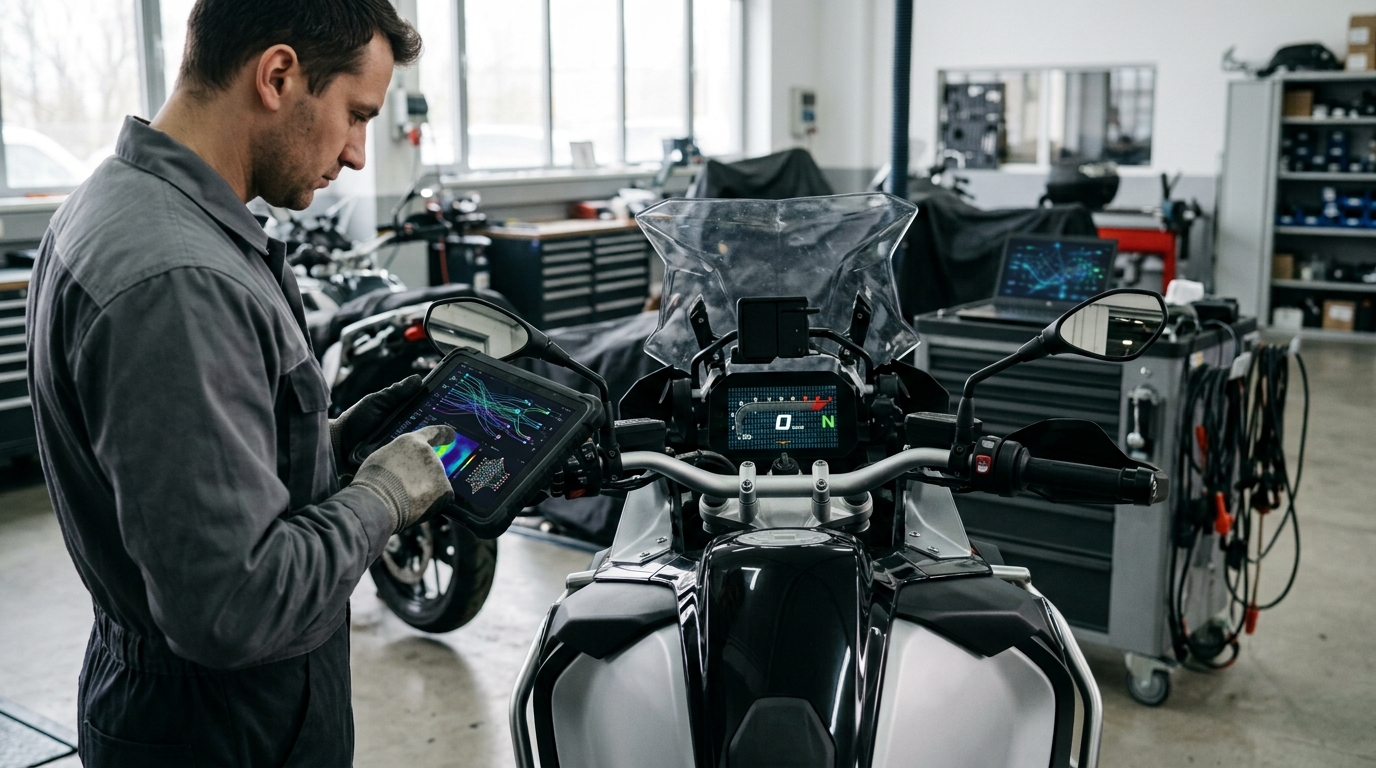
Before buying a motorcycle with advanced rider assistance systems, riders should think beyond the spec sheet. A long feature list does not automatically mean the bike is right for your riding style. A commuter, track-day rider, touring rider, Micro Sprint racer, and weekend cruiser may all need different setups.
Ask practical questions. Can the system be serviced locally? Are replacement sensors expensive? Does the bike require calibration after front-end work, fairing work, suspension changes, or crash repair? Will aftermarket accessories interfere with sensor placement? Does the system still work correctly with luggage, windshields, lighting upgrades, or custom modifications?
Riders should also consider how the technology feels. Some riders like a more controlled, refined setup. Others prefer a rawer, more mechanical feel. Neither is automatically wrong. The goal is to build or maintain a motorcycle that fits the rider, the road, and the intended use.
Maintenance Checklist for Motorcycles With Advanced Electronics
If your motorcycle has radar, cameras, advanced traction control, ride modes, electronic suspension, or other smart systems, maintenance should be more intentional. Start with basic mechanical condition. Check tires, brakes, fluid levels, suspension, drive components, lights, controls, and leaks. Then pay attention to the electronics.
Keep sensor areas clean and unobstructed. Do not install accessories where they may block radar, cameras, cooling airflow, or wiring access. After any crash, tip-over, front-end work, or bodywork repair, inspect sensor alignment and wiring condition. If the dashboard shows warnings, do not ignore them. A small warning today can become a bigger diagnosis later.
Clifford Cycles’ motorcycle services page is useful here because modern motorcycle care may involve general service, parts, tuning, machine work, and performance setup. Riders who want a reliable machine should treat technology and maintenance as one system.
Smart Technology Works Best With Smart Riders
The biggest mistake riders can make in 2026 is assuming technology makes them invincible. A radar alert cannot guarantee that a car will not change lanes. Traction control cannot create grip where tires are worn out. Adaptive cruise control cannot understand every road hazard. A camera cannot replace a rider who is alert, trained, and prepared.
Smart technology works best when the rider uses it as backup support. The safest approach is to combine good riding habits with a well-maintained motorcycle. That means checking the bike before rides, understanding the features, reading the owner’s manual, choosing quality parts, keeping up with service, and asking questions before making upgrades.
Advanced rider assistance systems in 2026 are a major step forward for motorcycles, but they are not magic. Radar, cameras, blind-spot alerts, adaptive cruise control, ride modes, and electronic suspension can all improve the riding experience when used correctly. But the foundation is still the same: strong maintenance, proper setup, quality components, and a rider who understands the machine.
For riders who want performance and confidence, the future is not only about adding more electronics. It is about making sure every part of the motorcycle works together. That is where expert service, tuning, electrical checks, suspension setup, and real-world motorcycle knowledge still matter.