A motorcycle safety checklist can help riders catch small problems before they become dangerous. A loose cable, worn tire, weak brake, low fluid level, or bad light can change a normal ride into a roadside problem. The good news is simple. Most issues give warning signs before they get worse.
Many riders return to the road when the weather gets better. Some motorcycles sit for weeks or months before spring and summer riding begins. During that time, tires can lose pressure. Fluids can drop. Batteries can weaken. Fuel can age. Rubber parts can crack. Brakes can feel different.
That is why a pre-ride check matters. It does not need to take all day. A careful inspection can help protect the rider, passenger, motorcycle, and everyone nearby. This guide explains what riders should check before the riding season and before regular weekend rides.
At Clifford Cycles, motorcycle service focuses on safety, reliability, and performance. From same-day tire changes to engine work, electrical diagnostics, fuel injection tuning, and dyno testing, the goal stays the same. Your motorcycle should feel ready when you roll out.
Why a Motorcycle Safety Checklist Matters Before Every Ride
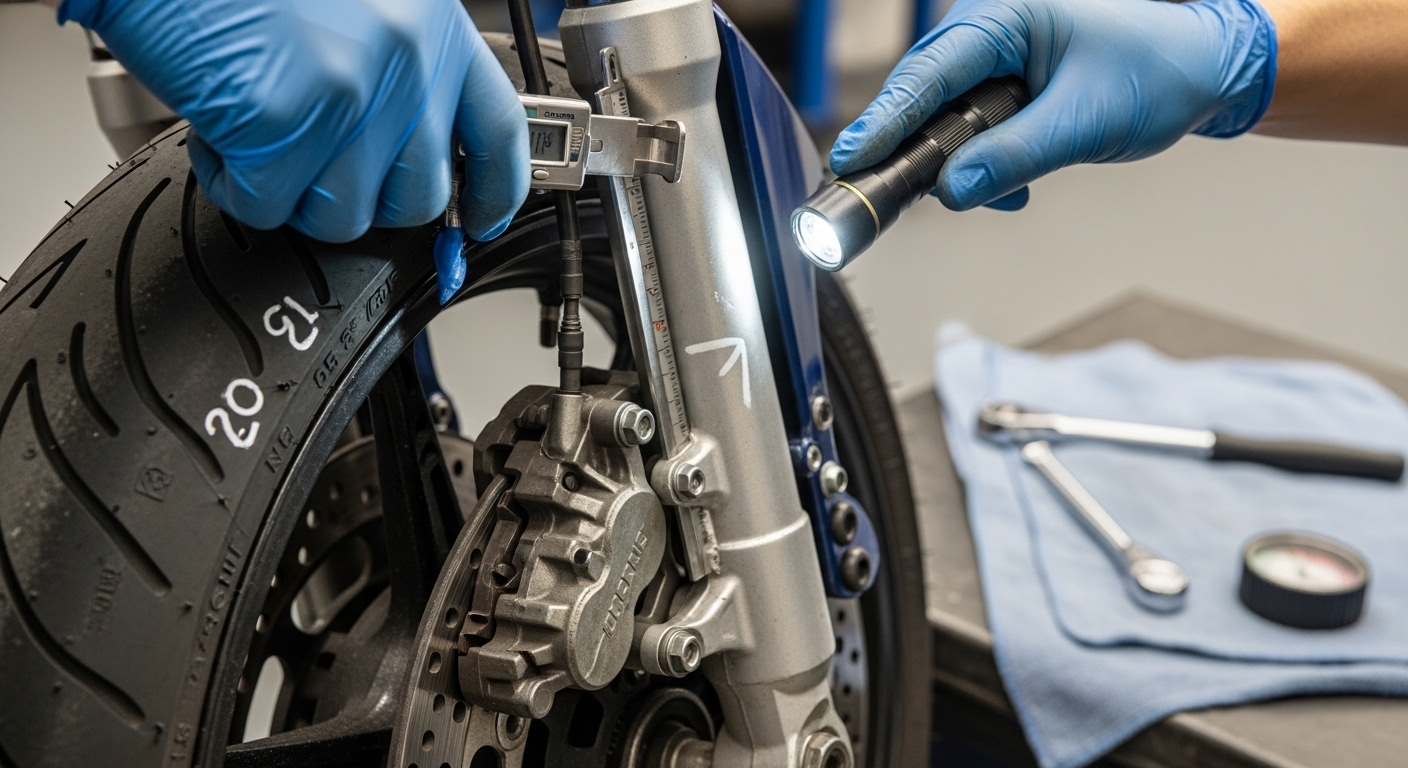
A motorcycle safety checklist gives riders a simple routine. It helps them look at the bike before speed, traffic, weather, or road hazards add pressure. Cars have four contact patches. Motorcycles rely on two. That makes tire condition, braking, suspension, lights, and balance very important.
Small problems can show up fast on a motorcycle. Low tire pressure can affect steering. Worn tread can reduce grip. Dirty brake fluid can weaken stopping power. A weak battery can leave a rider stranded. A bad signal light can make drivers miss a lane change.
A checklist also helps riders avoid guessing. Instead of waiting for a strange sound or rough feeling, riders can inspect key parts first. That saves time and may prevent more expensive repairs.
Start with tires and wheels
Tires should be the first stop on any inspection. Check the tire pressure when the tires are cold. Use the correct pressure from the motorcycle manual or tire information label. Do not rely only on looks. A tire can look fine and still run low.
Next, check tread depth. Look for uneven wear, flat spots, cracking, punctures, or bulges. If the tire looks damaged, do not ride on it. A tire problem at speed can become serious very quickly.
Also inspect the wheels. Look for dents, loose spokes, damaged valve stems, missing valve caps, and signs of impact. Spin the wheels if possible and listen for rubbing or rough movement.
When to replace motorcycle tires
Replace tires when tread gets too low, rubber gets old, or damage appears. Do not wait until cords show. Do not ignore sidewall cracks. Do not assume a tire is safe because the bike has low mileage.
Age matters. Storage conditions also matter. Heat, sunlight, chemicals, and long sitting periods can weaken rubber. If the bike sat for a long time, inspect the tires closely before riding.
Clifford Cycles offers motorcycle service support, including same-day ride-in tire changes for many bikes. Riders can visit the Motorcycle Services page to learn more about service options.
Check brakes, controls, and suspension
Brakes need a careful look before every riding season. Test the front brake lever and rear brake pedal. Both should feel firm and smooth. A soft, spongy, or weak feel can point to air, old fluid, worn pads, or a leak.
Look at the brake pads if you can see them. Thin pads need replacement. Check rotors for heavy scoring, cracks, warping, or uneven wear. Also check brake lines for cracks, swelling, leaks, or loose fittings.
Controls also matter. Twist the throttle and make sure it snaps back. Pull the clutch lever and feel for smooth movement. Check cables for fraying, rust, stiffness, or poor adjustment. Sticky controls can make riding harder and less predictable.
Suspension affects comfort and control. Look for fork oil leaks, shock leaks, loose fasteners, or strange noises. If the bike feels unstable, dives too much, bounces, or handles poorly, get it checked before longer rides.
Why brake feel should never be ignored
A motorcycle needs strong and predictable braking. If the lever feels different, listen to that warning. Do not ride hard and hope it improves. Brake problems usually get worse under heat, speed, or repeated stops.
Old brake fluid can absorb moisture. That can reduce braking performance. Worn pads can increase stopping distance. Damaged lines can create serious failure risks. A brake inspection is cheaper than a crash or major repair.
If the bike also needs performance or chassis setup help, Clifford Cycles can support service and setup work through its motorcycle department. A safer bike also gives the rider more confidence.
How to Inspect Lights, Fluids, Fuel, and Electrical Systems
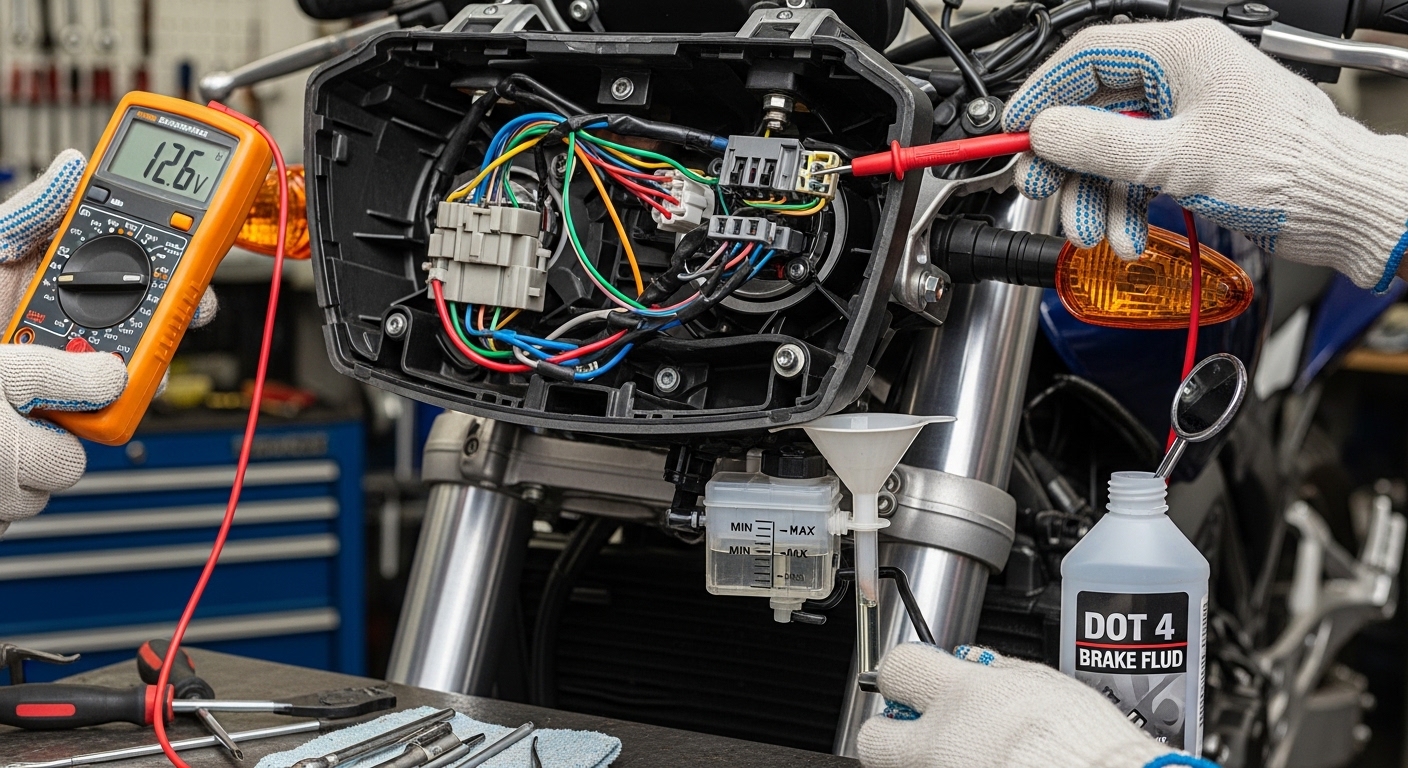
A strong motorcycle safety checklist should include everything that helps the rider see, stop, signal, cool the engine, and avoid leaks. These checks are simple, but they matter. They help prevent breakdowns and make the motorcycle more visible on the road.
Start with lights. Turn on the headlight, high beam, brake light, tail light, turn signals, and hazard lights if the bike has them. Check both front and rear signals. Also check the license plate light and dash indicators.
Visibility matters because drivers may not always see motorcycles quickly. Bright and working lights help other road users understand where the rider is going.
Inspect fluids, leaks, battery, and fuel
Check engine oil, coolant, brake fluid, clutch fluid if equipped, and fuel level. Use the correct method from the owner’s manual. Some bikes need to stand upright. Others use a side stand check or sight glass.
Look under the motorcycle for oil, fuel, coolant, or brake fluid leaks. A few drops can point to a bigger issue. Check hoses, clamps, reservoirs, drain bolts, filters, and seals.
The battery also deserves attention. A weak battery can cause hard starting, dim lights, electrical errors, or charging problems. Inspect terminals for corrosion. Make sure the battery sits securely. If the bike starts slowly, test the battery and charging system.
Fuel condition matters too. Old fuel can create rough starts, poor idle, and clogged fuel passages. Fuel-injected motorcycles may need injector cleaning or fuel system service if deposits build up. Clifford Cycles’ Fuel Systems page covers fuel injection tuning, injector cleaning, filters, pumps, and related support.
Electrical warning signs riders should watch
Electrical problems often start small. Watch for dim lights, flickering signals, weak starts, blown fuses, dead accessories, charging problems, or warning lights on the dash. These signs can point to wiring, battery, stator, regulator, switch, or ground issues.
Do not ignore electrical problems before a long ride. A bike that starts at home may fail after a fuel stop. A charging issue can drain the battery while riding. Bad lighting can also create safety risks at night or in traffic.
For wiring, lighting, and electrical concerns, riders can visit the Clifford Cycles Electrical service page. Proper diagnostics can save time and prevent wrong part replacement.
Final thoughts
A motorcycle safety checklist should become a habit, not a once-a-year task. Riders should check the motorcycle before the riding season, before long trips, after storage, and anytime the bike feels different.
The main checks are simple. Inspect tires, wheels, brakes, controls, lights, fluids, leaks, battery, fuel, chain or belt, and suspension. Secure cargo if you carry it. Adjust tire pressure and suspension when riding with extra weight.
For official safety guidance, riders can review the NHTSA Motorcycle Safety page. It offers practical reminders for riders and motorists.
Riding should feel exciting, not uncertain. If the bike shows warning signs, get it inspected before the next ride. Clifford Cycles helps riders keep motorcycles safer, stronger, and ready for the road with service, parts, engine work, fuel system support, and electrical diagnostics.